

Electrically induced bearing damage has become a major reliability concern in modern plants, especially with the widespread use of variable-frequency drives (VFDs), high-efficiency motors, and compact generators. Stray shaft currents create microscopic arcs through the rolling contacts, causing electrical pitting, fluting, and premature bearing failure. To counter this, modern bearings have developed several generations of insulation technologies-from plasma-sprayed ceramic coatings to full ceramic overlays and engineered polymer barriers-that block current without sacrificing mechanical performance.
This practical guide explains how bearing insulation technology systems work, where they are used, and how engineers can select the right technology for VFD motors, generators, and EV drivetrains.
Why Bearings Need Electrical Insulation
The Problem: Shaft Currents and EDM Damage
In VFD-driven and high-voltage machines, fast PWM switching, asymmetrical magnetic fields, and long motor cables generate shaft voltages relative to the frame. When this voltage exceeds the dielectric strength of the lubricant film, current discharges through the bearing in the form of Electrical Discharge Machining (EDM). Over time, this leads to:
- Frosted raceways with fine electrical pitting.
- Fluting-washboard-like grooves on inner or outer rings.
- Burnt, carbonized grease and elevated bearing temperatures.
Without insulation, even well-lubricated bearings can fail in months instead of years.

The Role of Bearing Insulation
Bearing insulation technologies aim to:
- Introduce a high-resistance layer between the shaft and the housing.
- Withstand operating voltages and environmental conditions for the machine’s life.
- Maintain standard fits, load ratings, and dynamic performance.
Different technologies achieve this insulation in different ways, each with its own strengths.
Plasma-Sprayed Ceramic Coatings
How Plasma Spray Insulation Works
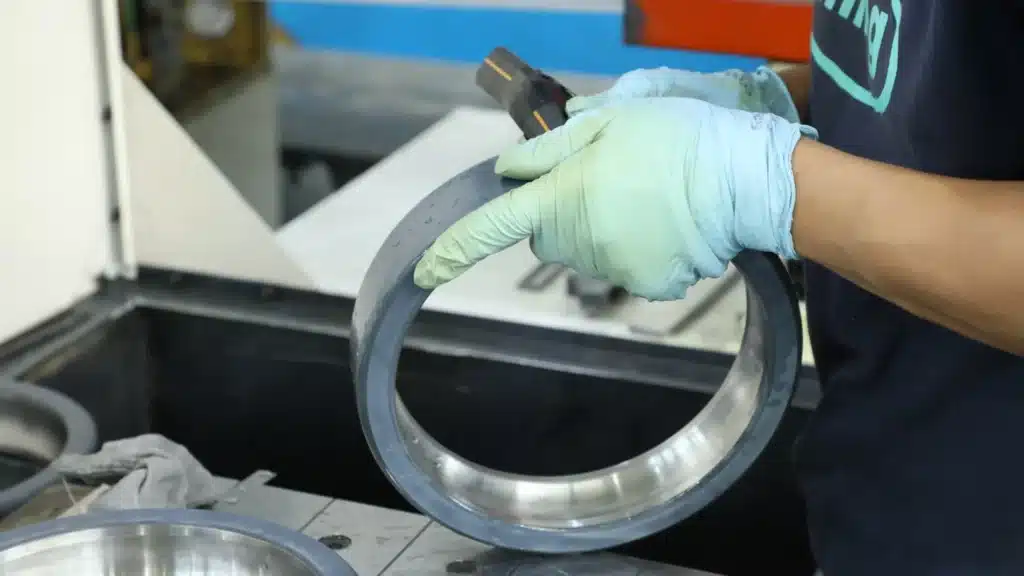
Plasma-sprayed coatings-often branded as INSOCOAT-type or similar-are among the most common bearing insulation solutions. In this process:
- The bearing ring (usually the outer ring) is masked in certain areas, and exposed surfaces are grit-blasted.
- Ceramic powder, typically aluminum oxide (Al2O3), is injected into a high-temperature plasma jet and melted.
- The molten particles impact the ring surface and rapidly solidify into a dense ceramic layer, usually 50-200 micrometres thick.
The result is a hard, adherent ceramic coating that insulates the ring from the housing or shaft.
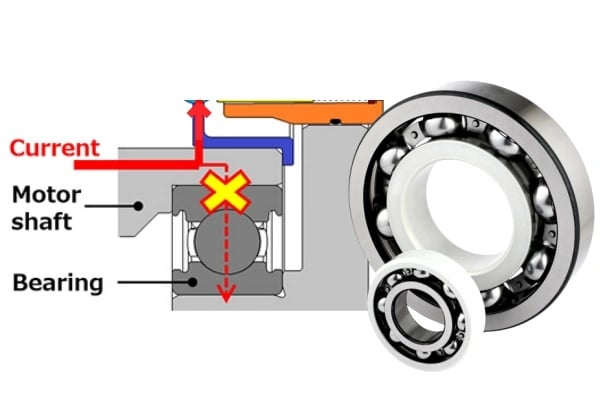
Key Performance Characteristics
- High insulation resistance: tens of megaohms or more at 500-1000 V DC.
- High breakdown voltage: coatings are typically rated up to at least 1000 V DC for standard industrial motors, with thicker variants for higher voltages.
- Mechanical robustness: the underlying steel ring retains its load capacity; the coating is engineered to resist chipping and thermal cycling.
These coated bearings are dimensionally interchangeable with standard bearings, making them a straightforward retrofit option.
Typical Applications
- VFD-driven industrial motors and pumps.
- Generator bearings in wind turbines and large alternators.
- Motors in corrosive or humid environments where the coating also adds corrosion resistance.
Because plasma-sprayed ceramic is a mature technology, it is often the default choice for general-purpose insulated bearings.
Ceramic Overlays and Hybrid Bearing Concepts
Ceramic Overlay on Rings
Beyond standard plasma spray, some manufacturers offer engineered ceramic overlays optimized for specific conditions:
- Multi-layer systems with metallic bond coats and dense ceramic topcoats for improved adhesion and impact resistance.
- Sealed and impregnated layers that reduce porosity and further increase dielectric performance in humid conditions.
- Tailored thickness (for example, 100 µm vs 200 µm) to balance breakdown voltage with dimensional control and heat transfer.
These overlays are still applied by thermal spraying, but process control and material design have been refined to deliver more consistent insulation and longer life.
Hybrid Ceramic Bearings
Hybrid bearings combine:
- Steel rings (with or without coatings), and
- Ceramic rolling elements, usually silicon nitride.
Because ceramic balls are non-conductive, the rolling contact path itself is electrically open, even if the rings remain conductive. Hybrid bearings:
- Virtually eliminate EDM in the rolling contacts.
- Offer lower mass and reduced centrifugal forces for high-speed applications.
- Have lower friction and potentially lower operating temperatures.
However, they are typically more expensive than coated steel bearings and require careful application to handle shock loads and misalignment.

Full-Ceramic Bearings
In specialized environments (e.g., high vacuum, strong chemicals, non-magnetic systems), fully ceramic bearings may be used. They offer:
- Complete electrical insulation.
- Excellent corrosion resistance.
- Suitability for extreme temperatures.
But they have different thermal expansion and toughness characteristics compared with steel bearings and are not yet common in large industrial motors.

Polymer Barriers and Non-Metallic Inserts
Polymer-Based Insulation Strategies
Another major category of bearing insulation uses polymers or composite materials:
- Polymer-lined housings or sleeves isolating the bearing outer ring from the frame.
- Non-metallic end shields or cartridge units that integrate both mechanical support and insulation.
- Engineered plastic cages or inserts that provide partial electrical isolation between rings and rolling elements.
High-performance polymers such as PEEK or epoxy-glass composites are chosen for:
- Good dielectric strength.
- Chemical resistance and low moisture uptake.
- Adequate stiffness and thermal stability at operating temperatures.
Strengths and Limitations
Polymer barriers:
- Are attractive where housings can be redesigned or where bearings come as cartridges.
- Can provide both vibration isolation and electrical insulation in a single component.
- May be more sensitive to mechanical creep, high temperatures, or certain chemicals compared with ceramic materials.
In high-power or high-temperature VFD motors, ceramic-based insulation is still more common, but polymer barriers are gaining ground in smaller motors, gear units, and integrated mechatronic assemblies.
Comparing Insulation Technologies
Feature Comparison Table
| Feature / Aspect | Plasma-Sprayed Ceramic Coating | Ceramic Overlay / Hybrid Concept | Polymer Barriers & Inserts |
| Primary insulation material | Alumina or similar ceramic | Ceramic + ceramic balls or multi-layer ceramic | High-performance polymers |
| Typical insulation resistance | MΩ to GΩ range | MΩ to GΩ range | MΩ range (design-dependent) |
| Voltage withstands (typical) | Up to ~1000-2000 V DC | Similar or higher (application-specific) | Moderate–high |
| Mechanical load capacity | Same as steel bearing | Same or higher (hybrid balls lower mass) | Depends on housing design |
| Dimensional interchangeability | Usually drop-in ISO sizes | Depends on design; hybrids generally interchangeable | Often requires special housings |
| Thermal performance | Good; coating adds some resistance | Very good for hybrids at high speed | Limited by polymer temp rating |
| Best suited for | General industrial VFD motors, generators | High-speed, demanding drives, EV traction | Small motors, integrated units |
Engineering Trade-Offs: Thickness, Hardness, and Dielectric Strength
Optimizing Coating Thickness
Coating thickness is a key parameter in ceramic-based insulation:
- Thin coatings (around 50-80 µm) minimize dimensional change and thermal resistance but may have lower breakdown voltage and be more vulnerable to pinholes.
- Thicker coatings (100-200 µm or more) increase dielectric strength and corrosion protection, but can raise internal stresses and affect heat dissipation and fits.
Manufacturers use process control and post-treatment (e.g., sealing) to achieve a coating thickness that meets insulation requirements without compromising mechanical performance.
Hardness, Adhesion, and Wear
Plasma-sprayed alumina coatings are significantly more complex than steel, giving excellent resistance to fretting and wear on the insulated ring. However, the coating must also:
- Exhibit strong adhesion to the steel substrate.
- Have controlled residual stress to avoid cracking under vibration.
- Survive thermal cycling without delamination.
Modern overlay systems pass strict impact, adhesion, and temperature tests to qualify for demanding motor and generator applications.
Dielectric Strength and Long-Term Stability
Dielectric performance depends on:
- Material purity.
- Porosity and crack density.
- Surface condition and sealing.
Well-designed coatings and polymer barriers maintain high insulation resistance even in humid or slightly contaminated environments. However, heavy moisture, conductive dust, or oil films can gradually reduce surface resistance, making good sealing and environmental control important.
Application Trends: Where Each Technology Shines
Industrial VFD Motor and Pumps
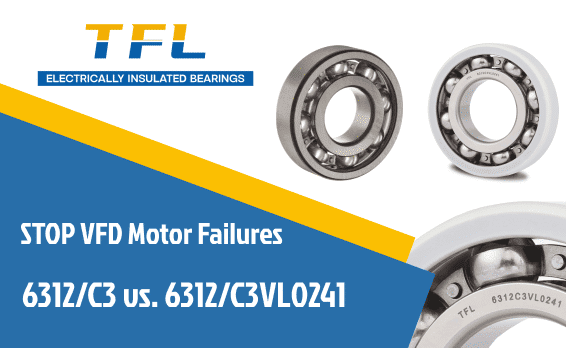
For standard IEC/NEMA motors from around 15 kW and up driven by VFDs, plasma-sprayed ceramic-coated bearings are now widely used. They offer:
- A simple retrofit for existing motor designs.
- Adequate insulation for typical drive voltages.
- Competitive cost and availability.
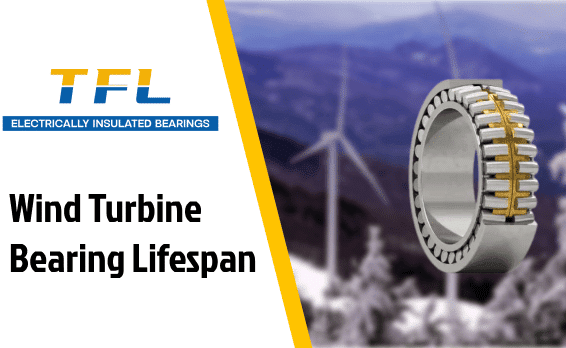
Wind Turbines and Large Generators
High-power generators operate with strong fields and complex grounding, making them prone to bearing currents. Here, both coated bearings and hybrid ceramic bearings are used:
- Coated bearings in generator ends to block circulating currents.
- Hybrid bearings in high-speed stages of gearboxes or auxiliary drives where both electrical and mechanical demands are extreme.
Electric Vehicles and Traction Drives
EV traction motors combine:
- Very high switching frequencies and voltages.
- Wide speed ranges and frequent regenerative braking.
Designers often choose hybrid bearings or advanced ceramic overlays on key positions to ensure both electrical insulation and high-speed performance. Polymer barriers may also appear in integrated e-axles and gearboxes.
Compact Industrial Gearmotors and Integrated Solutions
In smaller frame motors, gearboxes, or servo actuators, polymer barriers and non-metallic housings offer a cost-effective way to integrate both electrical and vibration isolation, especially where complete redesign of the package is possible.
Recommended Insulated Bearing Models for VFD Motors
To help you get started with protecting your critical assets, here are some of the most frequently requested insulated bearing specifications for standard industrial motors (15kW – 500kW):
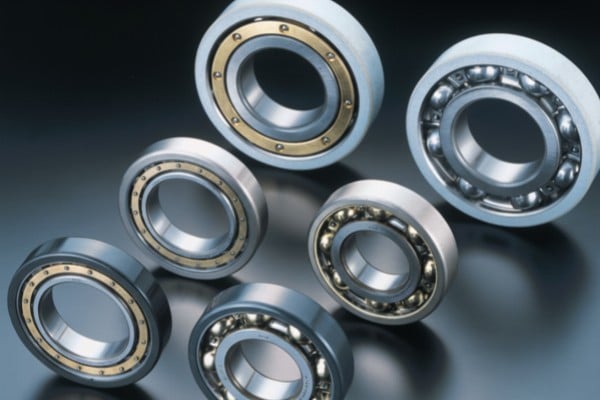
- 6316-M-C3-VL0241 (Deep Groove Ball Bearing, Insulated Outer Ring, C3 Clearance)
- 6319-M-C3-VL0241 (Deep Groove Ball Bearing, Insulated Outer Ring, Heavy Duty)
- NU 322-ECM-C3-VL0241 (Cylindrical Roller Bearing, Insulated Outer Ring)
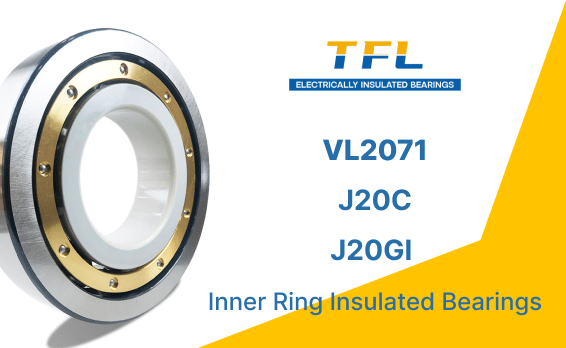
- 6324-M-C3-VL2071 (Deep Groove Ball Bearing, Insulated Inner Ring for specific generator applications)
- 6330-M-C3-VL0241 (Large Bore Insulated Bearing for High Power Motors)
Note: The suffix “VL0241” typically denotes a standard aluminum oxide coating on the outer ring. Ensure you check dimensions and load ratings for your specific application.
Practical Selection Guidance for Engineers
When choosing a bearing insulation system:
Quantify Electrical Stress
- Know the inverter voltage, switching frequency, and typical shaft voltages if possible.
- Higher voltages and longer cables push you toward more robust ceramic solutions.
Consider Mechanical and Thermal Loads
- High speeds and loads may favour hybrid bearings.
- High temperatures or heavy shocks call for ceramic systems with proven adhesion and toughness.
Evaluate Environmental Factors
- For humid, salty, or chemically aggressive environments, dense, sealed ceramic coatings provide both insulation and corrosion protection.
- For clean, low-temperature environments, polymer barriers may be sufficient and cost-effective.
Check Interchangeability and Service Practicality
- Ensure insulated bearings are available in required ISO sizes.
- Consider whether maintenance personnel can easily replace or test the chosen solution.
Coordinate with Grounding and Filtering
- Insulation is only part of the picture. Combine insulated bearings with proper shaft grounding, cabling, and filters to manage currents system-wide.
Advances in bearing insulation technologies-plasma-sprayed ceramic coatings, engineered ceramic overlays and hybrid designs, and high-performance polymer barriers-give engineers a powerful toolkit to combat electrically induced bearing damage in VFD motors, generators, and EV drives. Each technology offers a different balance of electrical performance, mechanical robustness, cost, and integration complexity.
For most industrial VFD motors, ceramic-coated bearings remain the go-to solution thanks to their high insulation resistance, drop-in interchangeability, and proven reliability. Hybrid ceramic bearings and sophisticated overlays extend these benefits into high-speed and high-voltage applications, while polymer barriers enable compact, integrated solutions that allow housings to be redesigned.
Protect Your Equipment with TFL Insulated Bearings
Understanding the theory behind bearing insulation technologies is the first step; implementing the right solution is where we come in. At TFL Insulated Bearings, we specialize in manufacturing high-performance electrically insulated bearings designed to withstand the rigors of modern VFD and generator applications.
Whether you need a drop-in replacement with a plasma-sprayed coating or a custom hybrid solution for high-speed traction motors, our engineering team is ready to assist. We ensure every bearing meets strict dielectric and mechanical standards to keep your operations running smoothly.
Ready to eliminate electrical bearing damage?
- Contact Us: Send your technical requirements or model numbers to [email protected].
- Call Us: Speak directly with our insulation experts at +86 15806631151.
- Get a Quote: Click the button below to request pricing for your specific motor requirements.