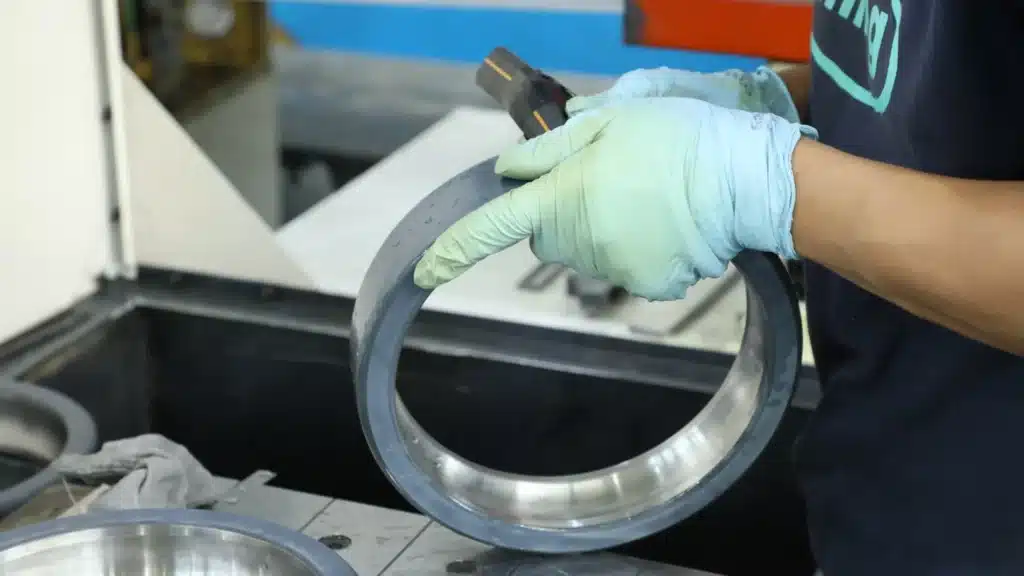


Five Reasons for Using Electrically Insulated Bearings in Motors
TFL Electrically Insulated Bearings use high-performance ceramic coatings to effectively prevent shaft current damage, extend motor life, and reduce maintenance costs. They are widely applied

Solutions to Motor Bearing Electrical Damage — The Case of 6322 C3VL0241
TFL addresses critical motor bearing failures caused by stray electrical currents with its specialized 6322 C3VL0241 Electrically Insulated Bearing. This solution effectively prevents electrical erosion,
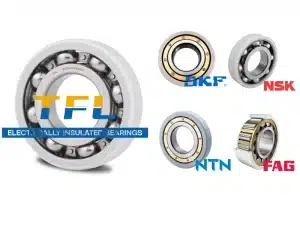
Seamless Swaps: TFL Cross-Reference for SKF, FAG, NTN, NSK Insulated Bearings
Looking to replace your SKF, FAG, NTN, or NSK insulated bearings? Discover our TFL cross-reference guide for a seamless and reliable interchange, ensuring perfect compatibility

What Are Electrically Insulated Bearings? Working Principle and Applications
The electrical insulation bearing achieves the physical isolation of the bearing from the current by applying a coating. They are commonly applied in wind power
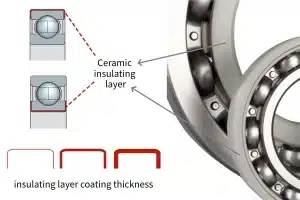
Does A Thicker Coating Mean Better Insulation? A Selecting Guide
This article provides a detailed guide on selecting the optimal coating thickness for insulated bearings. It debunks the misconception that “thicker is always better” or
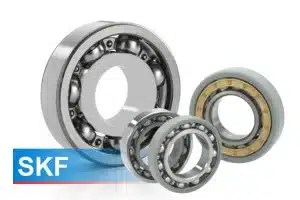
SKF INSOCOAT Bearings Explained: Features, Advantages, and Selection Guide
This article introduces TFL Insulated Bearings as a superior, cost-effective alternative to SKF INSOCOAT bearings, specifically designed to eliminate shaft current erosion in VFD-driven motors
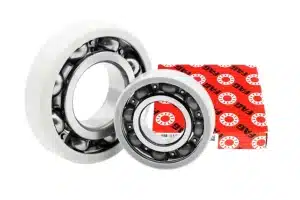
What Does the J20AA Suffix Mean? Decoding FAG Insulated Bearing Nomenclature
This article decodes FAG insulated bearing nomenclature, explaining suffixes like J20AA, J20B, J20A, J20C, and HC, their insulation properties, and applicable environments. It then introduces
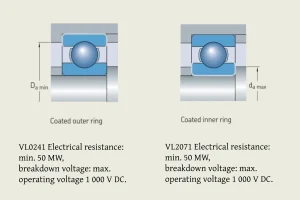
What’s the Difference Between VL0241 and VL2071 Coatings?
VL0241 coating is on the outer ring, ideal for lower shaft voltage; VL2071 coating is on the inner ring, better for high-frequency shaft currents and