

Electric motors are vital components powering a myriad of machines across manufacturing, transportation, energy, and more. Despite their crucial role, modern electric motors face a significant but often overlooked threat: electrical currents flowing through the motor shaft can damage bearings, leading to increased noise, vibration, premature failure, and costly equipment downtime. Fortunately, insulated bearings provide an effective technological solution by preventing harmful electrical currents from flowing through bearings. This comprehensive guide explores the causes and effects of electrical bearing damage and explains how insulated bearings help mitigate these issues, improving motor reliability and lifespan.
What Causes Electrical Damage in Bearings?
Electrical damage to bearings primarily stems from currents induced by the operation of Variable Frequency Drives (VFDs) and inverters, as well as the electromagnetic characteristics of electric motors. These components, while improving motor control and efficiency, generate electrical phenomena that are harmful to standard steel bearings. The main causes include:
1. Shaft Voltage Generated by VFDs and Inverters
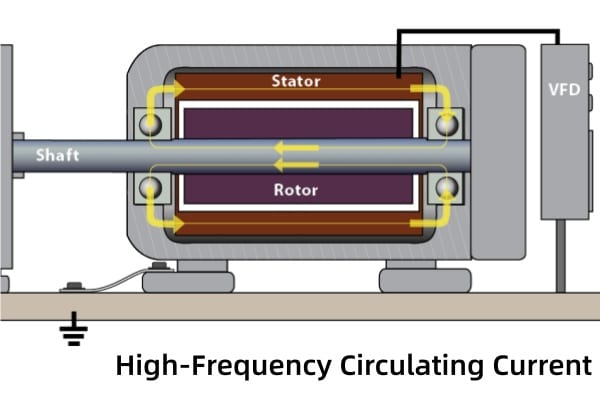
VFDs and inverters regulate motor speed by rapidly switching voltages at high frequencies. This switching creates common-mode voltages on the motor shaft, which manifest as stray electrical voltages seeking a path to ground. Often, these currents flow via the motor bearings, which, unfortunately, become unintended conduction paths.
2. Electrostatic Induction
Capacitive coupling between the stationary and rotating parts of the motor induces electrical charges on the rotor shaft, further elevating shaft voltages.
3. Electromagnetic Imbalances
Anomalies in winding configurations or magnetic circuits produce circulating currents that may seek the path of least resistance, frequently passing through the bearings.
4. Grounding Issues
Inadequate or improper grounding of the motor frame or shaft accentuates voltage buildup, exacerbating bearing current.
How Does Electrical Current Damage Bearings?
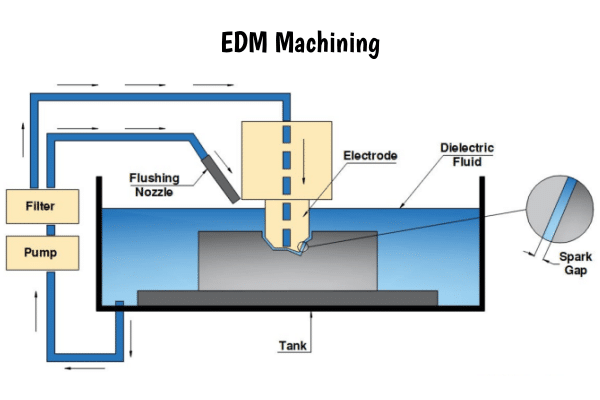
When shaft voltage surpasses the dielectric breakdown voltage of the lubricant film within a bearing, an electrical discharge or micro-sparking occurs across the rolling elements and raceways. This process is called Electric Discharge Machining (EDM) or electrical erosion.
Effects of Electrical Discharge on Bearings
- Electrical Pitting: Tiny craters form on the bearing surfaces from repeated electrical sparking.
- Fluting: Fine grooves or ripples develop, typically on raceways, leading to vibration and noise.
- Surface Roughness: The smooth, low-friction surface is damaged, increasing friction and wear.
- Degraded Lubricants: Arcing breaks down lubricants chemically, reducing their protective ability.
- Thermal Damage: Localized heat from sparks raises bearing temperature, accelerating wear.
These damages drastically reduce bearing life, often causing failure in months instead of years, and lead to noisy, inefficient motor operation, risking catastrophic failure.
Types of Bearing Currents Causing Damage
Three main types of bearing currents cause electrical damage:
1. Capacitive Coupling Currents
Generated by the capacitive coupling between the motor stator and rotor, these high-frequency currents pass through bearings and risk sparking and erosion.
2. Inductive Coupling Currents
Magnetic imbalances cause current loops to circulate through the motor, bearings, and frame, contributing to electrical erosion.
3. Rotor Ground Currents
When rotor grounding is faulty or missing, large currents flow through bearings as they attempt to discharge shaft voltages to ground.
Each causes destructive electrical energy to flow through the bearings, damaging critical surfaces.
How Do Insulated Bearings Protect Against Electrical Damage?
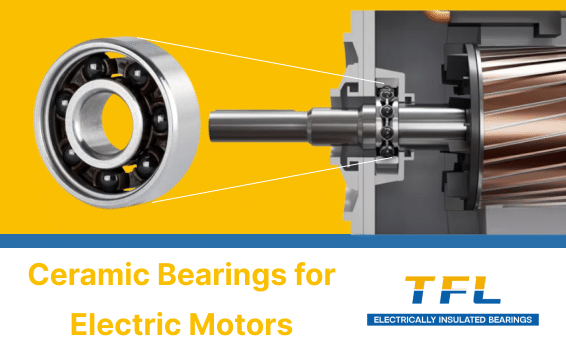
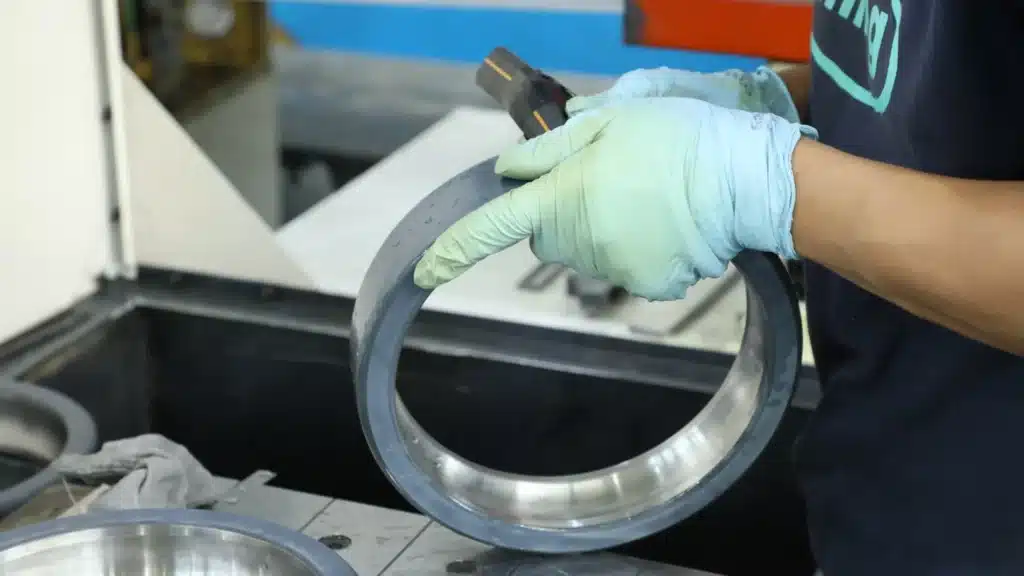
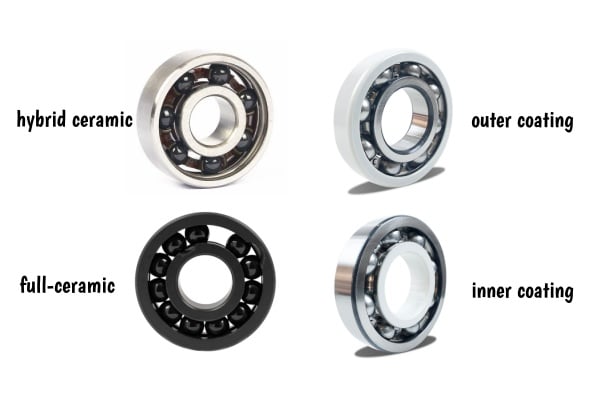
Insulated bearings are designed to break the electrical circuit passing through the bearing assembly. This is usually done by applying a plasma-sprayed ceramic insulation coating (commonly alumina oxide) on one of the bearing rings (inner or outer). Other designs use ceramic rolling elements or full ceramic components.
Protection Mechanism
- The ceramic layer offers high electrical resistance, typically withstanding DC voltages over 1000 volts.
- This insulation blocks the flow of shaft currents between the rotor and stator.
- By preventing current flow, the insulation stops electrical discharge machining and preserves smooth bearing surfaces and lubricants.
Types of Insulation Coatings
- Outer Ring Coated: Most common, providing easy electrical isolation.
- Inner Ring Coated: Used when motor or installation requires higher electrical isolation.
- Hybrid or Full-Ceramic Bearings: Offer additional insulation and mechanical durability.
Benefits of Using Insulated Bearings
- Extended Bearing Life: Protection from electric erosion substantially extends bearing service intervals.
- Reduced Maintenance and Downtime: Fewer failures lower unexpected repairs and production halts.
- Improved Motor Performance: Reduced friction, vibration, and noise improve overall efficiency and longevity.
- Compliance with Modern Motor Designs: Essential for motors using VFDs and inverter technology.
- Simple Integration: Insulated bearings retain standard dimensions, making direct replacements easy without rewriting machine designs.
Complementary Measures to Mitigate Electrical Bearing Damage
While insulated bearings are highly effective, combining them with additional techniques enhances protection:
1. Shaft Grounding Rings or Brushes
These devices safely divert harmful shaft currents to ground, dramatically reducing bearing currents in motors under 100 horsepower.
2. Proper Motor Installation and Wiring
Utilizing optimized motor grounding, cable shielding, and correct wiring techniques reduces induced voltages and stray currents.
3. Use of Hybrid or Full Ceramic Bearings
Hybrid bearings provide supplemental insulation and mechanical benefits in challenging operating environments.
4. Routine Monitoring and Maintenance
Continuous measurement of shaft voltage, bearing insulation resistance, and vibration analysis helps detect problems early, enabling timely intervention.
Secure Your Motor Reliability with TFL Insulated Bearings
Electrical erosion is a silent threat that can lead to costly downtime and premature motor failure. At TFL Insulated Bearings, we specialize in high-performance solutions designed specifically to block harmful VFD-induced currents and prevent the pitting and fluting that destroy standard bearings. We understand the critical need for durability in your operations, and our engineered insulation coatings provide the robust protection your machinery demands.
Don’t wait for the next breakdown.
Take proactive steps to protect your assets today. Contact our technical team to discuss your specific motor requirements or request a customized quote.
- Email Us for a Quote: [email protected]
- Call / WhatsApp: +86 15806631151