

In modern industries ranging from automotive and robotics to mining and wind energy, electric motors and machinery often operate in demanding, high-load, high-speed environments. The choice of bearings in these conditions is crucial not only for performance but also for reliability, efficiency, and cost-effectiveness. The correct motor bearing ensures minimal friction, supports heavy and complex loads, withstands high rotational speeds without overheating, and withstands continuous or shock operation. This comprehensive guide introduces you to the science, critical selection criteria, materials, leading bearing types, and best practices for choosing the perfect motor bearing for high-load, high-speed applications.
Understanding the Demands of High-Load and High-Speed Operation
What Defines High Load and High Speed?
Understanding the demands of high-load, high-speed operation is essential for selecting and maintaining motor bearings that deliver reliable, long-term performance in today’s most challenging industrial environments.
High Load:
In motor bearing applications, “high load” refers to the requirement to support significant forces-radial (force directed perpendicular to the shaft) and axial (along the shaft). Such loads are typical in heavy-duty applications like mining conveyors, gearboxes, crushers, presses, and other large industrial equipment. When a bearing operates under high load, there is an increased risk of surface fatigue, spalling, deformation, and premature failure if not selected, installed, or maintained appropriately. Bearings designed for high-load applications, such as spherical or cylindrical roller bearings, offer enhanced load-carrying capacities and robust internal geometries to distribute forces efficiently while resisting deformation.

High Speed:
A high-speed bearing is intentionally designed to function at extremely high rotational speeds—often exceeding 10,000 RPM in small to moderate sizes, but sometimes 30,000 RPM or more in special applications like racing engine spindles, CNC machine tools, gas turbines, compressors, and electric vehicle drivetrains. At these rates, rolling elements generate substantial centrifugal force, heat, and internal stresses. High-speed bearings are typically manufactured with tighter tolerances, advanced materials such as ceramics or hybrid designs, special cages, and precision lubrication systems to minimize friction, manage heat, and maintain stability.

Combined Demands and Engineering Considerations:
Operating at high loads and high speeds at the same time introduces a unique set of engineering challenges:
- Centrifugal Forces: The faster the bearing rotates, the greater the outward force on the rolling elements, which can distort raceways and change the load distribution. Designers must consider these forces using advanced simulations and select materials that maintain shape under stress.
- Frictional Heat: High RPMs naturally generate more friction, which raises operating temperatures. Bearings must have lubrication systems and materials (like synthetic oils or greases, or hybrid balls) designed for thermal stability.
- Misalignment Risks: Both load and speed exacerbate any misalignment, leading to uneven wear, vibration, and compromised life expectancy. High-speed units often rely on precise mounting and self-aligning designs.
- Potential for Surface Fatigue: Repeated high-stress cycles cause fatigue cracks, spalling, and rolling contact fatigue more quickly than in standard-duty applications.
- Heightened Need for Precision: High RPMs require precise balance, minimal radial and axial play, and advanced cage designs to prevent instability or contact-related wear.
- Robust Lubrication: Lubricants must provide a persistent film at both high pressure and speed, resist oxidation, and not break down at elevated temperatures.
High-load and high-speed operations thus place extraordinary demands on bearing technology and system maintenance. As a result, proper selection, precise installation, optimal lubrication, continuous monitoring, and regular refinement of maintenance protocols are non-negotiable for preventing premature failures, excessive downtime, and costly repairs.
Step 1: Determine Application Requirements
1. Load Type and Magnitude
- Radial Load: Perpendicular to shaft. Best handled by deep groove and cylindrical roller bearings.
- Axial Load: Along the shaft. Angular contact, tapered roller, and thrust bearings excel.
- Combined Loads: Require bearings (like spherical or angular contact bearings) that can handle both.
2. Rotational Speed
- Critical Speed: Defined by the bearing’s geometry, material, and lubrication. Exceeding the recommended speed leads to heat build-up and premature failure.
- RPM Ranges: Deep groove, angular contact, and hybrid/ceramic bearings typically allow the highest speeds.
3. Environmental Conditions
- Contamination: Dusty, wet, or chemically aggressive? Select sealed/shielded or corrosion-resistant designs.
- Temperature: High speeds generate heat; ensure thermal tolerance in both bearing and lubrication.
Step 2: Select the Optimal Bearing Type for High-Load and High-Speed
1. Angular Contact Ball Bearings
- Best For: High-speed and combined load scenarios.
- Features: Designed for both radial and significant axial (thrust) loads; can sustain very high speeds.
- Popular Use: Spindles, high-speed motors, pumps.
- Paired Arrangements: Duplex (face-to-face or back-to-back) installation for greater thrust capacity and rigidity.
2. Cylindrical Roller Bearings
- Best For: High radial load capacity and high speed.
- Features: Cylindrical rollers provide large contact areas and support heavy radial loads, all while allowing moderate to high-speed operation.
- Limitations: Handles less axial load (unless special flanges are used).
3. Tapered Roller Bearings
- Best For: High radial and (unidirectional) axial loads.
- Features: Tapered design transmits large forces, supports heavy machinery and axle loads, with moderate speed capability.
- Popular Use: Automotive hubs, gearboxes, quarry/construction vehicles.
4. Spherical Roller Bearings
- Best For: Heavy combined loads plus misalignment.
- Features: Barrel-shaped rollers allow for angular shaft misalignments while supporting immense load.
- Industries: Mining, wind turbines, crushers, conveyors.
5. Deep Groove Ball Bearings
- Best For: Moderate-to-high speeds and moderate loads.
- Features: The most versatile bearing, allowing both radial and limited axial loads, with low friction and cost.
- Popular Use: High-speed electric motor applications where loads are not extreme.
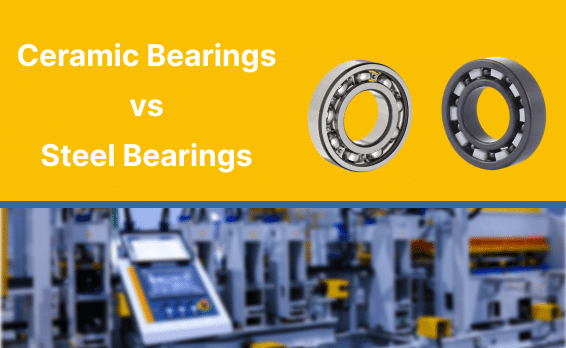
6. Hybrid and Ceramic Bearings
- Best For: Ultra-high-speed, electrically noisy, and high-temperature environments.
- Features: Incorporate silicon nitride ceramic balls with steel rings—deliver lower friction, lower mass, higher speed, insulation from electrical current, and excellent wear resistance.
Step 3: Material Matters-Selecting the Best for Performance
1. Bearing Steels
- Chrome Steel (AISI 52100): The industry standard for most applications.
- High-carbon or Stainless Steel: When corrosion resistance is key.
2. Ceramics (Silicon Nitride)
- Benefits: Light weight, minimal heat generation, electrical insulator, does not magnetize.
- Drawbacks: Higher cost, brittle (though very hard).
3. Special Polymers, Composites
- Use When: Weight is critical or aggressive chemistries demand it.
Tip: Ceramic or hybrid bearings excel in high-speed, high-temperature settings due to their superior properties.
Step 4: Lubrication-The Lifeblood of High-Performance Bearings
- Essential for: Reducing friction, dissipating heat, and extending lifespan.
- Grease: Easy maintenance, good for moderate-to-high speeds.
- Oil: Better cooling for ultra-high speed, frequently used in turbine and spindle bearings.
Tips:
- Synthetic lubricants outperform mineral oils at higher temperatures and speeds.
- Use scheduled re-lubrication or automated systems for continuous operation.
Step 5: Design Factors & Installation Considerations
1. Precision and Internal Clearance
- High Precision: Reduces runout and vibration; essential for high speeds.
- Optimal Internal Clearance: Small clearances reduce vibration at high speed, large clearances counteract thermal expansion at high loads.
2. Bearing Arrangement
- Paired Bearings: Face-to-face or back-to-back orientations increase rigidity and thrust handling.
- Floating vs. Fixed: Allow for shaft thermal growth and prevent stress during operation.
3. Sealing and Shielding
- Seals: Exclude contaminants in dirty/wet environments; low-friction seals for speed.
- Shields: Good for keeping dust out at high speed with less drag.
4. Mounting Tolerances
- Proper Fits: Prevent shaft or housing creep and minimize noise and vibration.
- Avoid Over-tight Installation: Too much preload can cause heat, while too little causes slippage.
Step 6: Bearing Load and Speed Ratings
- Every bearing has “dynamic” and “static” load ratings; ensure your chosen bearing handles both the running load and any start/stop or shock situations.
- For speed, refer to the manufacturer’s “limiting speed” ratings-choose bearings rated at or above the intended RPM.
Step 7: Advanced Technologies for Extreme Applications
1. Hybrid Bearings for Speed and Electrical Insulation
- Si3N4 Balls: Withstand speeds >20,000 RPM; remain cool and are electrically insulating.
- Great for: High-speed motors prone to electrical erosion from inverters/VFDs.
2. Special Surface Coatings
- Diamond-like carbon (DLC) or PTFE coatings: Reduce friction, extend service life.
3. Custom Designs
- Tailored geometries, materials, and integrated sensor systems for unique applications in aerospace, racing, and high-value industrial motors.
Case Studies: Matching Bearings to Application
1. Wind Turbine Main shafts
- Bearing Type: Spherical roller bearing.
- Reason: Huge radial and axial loads, shaft deflection, slow-to-moderate RPM.
2. Racing Electric Motors
- Bearing Type: Hybrid angular contact ball bearings.
- Reason: 20,000+ RPM, low friction, resistance to electrical current from inverters.
3. Steel Mill Rollers
- Bearing Type: Cylindrical/tapered roller bearings (with special high-load capacity).
- Reason: Massive radial load, moderate rotational speed.
Maintenance & Predictive Approaches
- Install condition monitoring: Vibration, temperature, and acoustic sensors.
- Schedule regular inspections: Look for noise, overheating, vibration, and performance drops.
- Proactively replace lubricants and bearings based on usage and predictive data, not just after failures.
Conclusion
- Always begin with a detailed analysis of operating speed, expected load, and environmental conditions.
- Choose bearing types-angular contact, cylindrical/spherical/tapered roller, deep groove, or hybrid/ceramic-aligned with your specific high-load or high-speed needs.
- Material and lubricant choices greatly influence bearing lifespan and motor reliability.
- Installation precision, ongoing maintenance, and sometimes custom bearing solutions enable motors and machines to perform flawlessly, even under the most demanding conditions.
- Working with trusted manufacturers and following application-specific guidelines ensures success in any high-load, high-speed application.
Choose TFL Insulated Bearings for Your Next Project
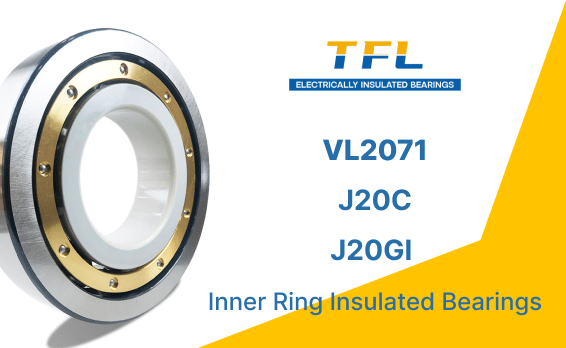
At TFL Insulated Bearings, we understand that balancing high loads and high speeds requires more than just a standard component—it requires precision engineering and robust protection against modern challenges like electrical erosion and thermal stress. We are dedicated to providing high-quality insulated and hybrid bearing solutions designed to maximize the lifespan and efficiency of your motors, even in the most demanding industrial environments.
Ready to upgrade your machinery’s reliability? Don’t let premature failure disrupt your operations. Connect with our technical experts today to discuss your specific application needs or request a custom quote.
Email: [email protected]
Phone/WhatsApp: +86 15806631151