
Bearings are crucial components in motors and machinery, enabling smooth rotation while bearing the loads and stresses of industrial operation. However, bearing failure is a common cause of equipment downtime and costly repairs. Among the various causes of bearing failure, electrical damage, manifesting as electrical pitting, fluting, and issues caused by shaft voltage-plays a significant role in shortening bearing life. Understanding these failure modes is critical for selecting appropriate prevention techniques, including insulation and grounding solutions. This comprehensive guide explores electrical bearing failure, its causes, diagnosis, and mitigation strategies.
What Is Electrical Bearing Damage?
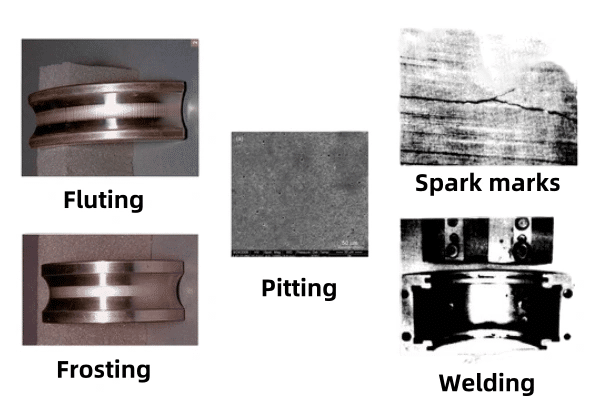
Electrical bearing damage occurs when stray electrical currents or shaft voltages flow through the bearing, causing localized electric discharges or arcing inside the bearing assembly. These discharges cause metal removal and degradation on the raceways and rolling elements, leading to several characteristic damage patterns:
- Electrical Pitting: This refers to multiple small craters or pits formed on the bearing surfaces as a result of repeated electric arcing. These pits cause surface roughness, increasing friction and noise.
- Fluting: Fine, evenly spaced grooves or ripple-like patterns occur on the bearing raceways. Fluting creates vibration, uneven load distribution, and eventual bearing failure.
- Burnt or Blackened Grease: Electrical discharges generate heat that can burn the lubricant, causing discoloration or degradation that undermines bearing lubrication.
- Frosting: The bearing components develop a frosted or roughened appearance due to repeated electrical damage.
These symptoms indicate underlying electrical current damage that can accelerate wear and lead to premature bearing failure if not addressed.
Causes of Electrical Bearing Damage and Shaft Voltage Issues
Several factors contribute to electrical damage in bearings:
1. Variable Frequency Drives (VFDs) and Inverter Supply
Modern electric motors often use VFDs to control speed by converting a fixed-frequency AC supply into a variable-frequency output. The switching action in these drives induces common-mode voltages and high-frequency currents on the motor shaft, resulting in shaft voltages that seek a path to ground, usually through the motor bearings.
2. Electrostatic Discharge (ESD)
High-frequency inverter switching can induce electrostatic voltages on the shaft, creating current pulses that cause tiny electrical discharges or sparks. These micro-arcs damage bearing surfaces over time.
3. Induced Currents
Magnetic imbalances and capacitive coupling between motor components can create circulating currents flowing through the bearings.
4. Poor Grounding or Earthing
Improper or missing shaft grounding leads to voltage buildup on the rotor shaft. Without a proper release path, shaft currents flow through the bearing, causing damage.
5. Environmental Factors
Moisture, contaminants, and corrosion can exacerbate electrical erosion by reducing insulation resistance and increasing current flow paths.
Diagnosing Electrical Bearing Damage
Identification of electrical damage relies on visual inspection, performance monitoring, and analysis of failure patterns:
- Visual Inspection: Pitting and fluting damage are clearly visible on bearing raceways and rolling elements under magnification.
- Noise and Vibration: Bearings with electrical damage exhibit increased noise levels and vibrations due to irregular load distribution caused by rough surfaces.
- Grease Discoloration: Burnt or blackened grease inside the bearing is a clear sign of electrical arcing and heat generation.
- Monitoring Shaft Voltage: Using voltage sensors and shaft grounding brushes can detect abnormal shaft voltages, indicating potential bearing damage.
Consequences of Electrical Bearing Damage
- Premature Bearing Failure: Damage accumulation leads to cracks, spalling, and total bearing failure much sooner than normal.
- Reduced Lubrication Effectiveness: Heat and currents degrade lubricants, increasing friction and wear.
- Increased Down Time and Maintenance Costs: Unexpected failures cause production interruptions and costly repairs.
- Potential Motor Damage: Bearing damage can cascade into shaft misalignment, rotor imbalance, and other motor component failures.
How to Prevent Electrical Bearing Damage
1. Use Insulated or Hybrid Bearings
Electrically insulated bearings have ceramic or other insulating coatings on the bearing rings, blocking current flow through the bearing and protecting against electrical erosion. Hybrid bearings use ceramic rolling elements that also provide electrical insulation.
2. Install Shaft Grounding Devices
Grounding brushes or rings installed on the motor shaft provide a low-resistance path for shaft currents, diverting harmful currents away from the bearings.
3. Proper Motor Grounding and Wiring
Ensure the motor frame and power system grounding meet recommended standards to prevent voltage buildup.
4. Use Filtering and Shielding on Cables
Electromagnetic interference from VFDs can be reduced through shielding and filtering techniques, lowering induced currents.
5. Monitor Bearing and Shaft Voltages Regularly
Routine measurement of insulation resistance, shaft voltages, and bearing temperatures helps detect early electrical issues before failure.
6. Follow Installation Best Practices
Correct mounting, alignment, and lubrication prevent mechanical stresses that can worsen electrical erosion effects.
Summary Table: Electrical Bearing Damage Symptoms and Prevention
| Symptom | Cause | Prevention |
| Electrical Pitting & Fluting | Electrical arcing currents | Insulated bearings, shaft grounding |
| Burnt Blackened Grease | Heat from electrical discharge | Use electrical insulation, proper lubrication |
| Increased Noise/Vibration | Surface damage, uneven load | Maintenance, vibration monitoring |
| Shaft Voltage Buildup | Poor grounding, induced currents | Proper grounding, shaft grounding |
We understand that unexpected downtime caused by electrical bearing failure is more than just an inconvenience—it is a significant cost to your business. At TFL Insulated Bearings, we are dedicated to providing high-performance solutions engineered specifically to combat the electrical pitting, fluting, and shaft voltage issues discussed in this guide.
Our advanced insulated bearings are designed to effectively block stray currents, ensuring your motors run smoother and last significantly longer. Don’t let preventable electrical damage compromise your machinery.
Ready to extend the lifespan of your motors?
Reach out to our engineering team today to discuss your specific applications and request a quote.
- Email: info@sdtflbearing.com
- Phone/WhatsApp: +86 15806631151