

High humidity and harsh environments can quietly destroy the electrical protection that insulated bearings are supposed to provide. Moisture, conductive dust, and aggressive chemicals all reduce insulation resistance, open leakage paths, and eventually allow shaft currents to arc through the bearing again, even when a ceramic or polymer barrier is present. Understanding how these factors act and how to design against them is essential if insulated bearings are being used in coastal plants, mines, wastewater facilities, or wash-down food factories.
Why Bearing Insulation Matters More in Tough Locations
Electrically insulated bearings are designed to block shaft currents from VFDs, long motor cables, and high DC bus voltages, preventing electrical pitting and fluting. In normal dry environments, modern ceramic-coated and hybrid bearings routinely achieve insulation resistances in the tens or hundreds of megaohms and withstand several kilovolts of test voltage.
In humid, dirty, or chemically aggressive atmospheres, however, the real insulation resistance can fall by orders of magnitude as moisture films and contaminants create alternate conductive paths around or through the insulating layer. This is why motors that look perfect on paper still suffer electrical bearing failures in the field when installed in harsh environments.
How Humidity Reduces Insulation Resistance
Moisture Films and Surface Leakage
Water molecules are polar and form thin conductive films on surfaces when the relative humidity is high. On a ceramic-coated bearing:
- A continuous moisture film can develop between the coated ring and housing, forming a surface leakage path that bypasses the bulk ceramic insulation.
- Any minor defects, pinholes, or exposed steel spots become nodes where current can concentrate and partially short the insulation.
Tests on coated bearings show that insulation resistance measured at high humidity is much lower than in dry-air, especially if the coating has higher porosity or an unsealed surface.

Moisture Absorption into Porous Layers
Plasma-sprayed alumina is inherently somewhat porous; if the coating is not properly sealed, moisture can be drawn into pores by capillary action. Absorbed water:
- Increases dielectric losses and effective conductivity through the coating thickness.
- Promotes internal corrosion at the steel–ceramic interface if pores reach the substrate.
Over time, this can reduce breakdown voltage and make the coating more prone to cracking under thermal cycling.
Condensation and Temperature Cycling
Dew Point Effects
Industrial equipment often experiences night-day temperature swings or intermittent operation. When a warm motor cools below the dew point of surrounding air:
- Water condenses first on the coldest internal surfaces—typically endshields, bearing caps, and shaft extensions.
- Condensation can collect in housings, around insulated bearing rings, and on shaft grounding devices.
Even a thin invisible film of condensed water is enough to create leakage paths across insulating surfaces.
Damage from Repeated Wet-Dry Cycles
Repeated condensation-evaporation cycles:
- Wash salts and dust into cracks and pores, concentrating contaminants in narrow gaps.
- Accelerate corrosion at any exposed edges of the ceramic coating or at microcracks.
- Cause small pieces of brittle ceramic to spall away if rust swells underneath.
As these defects grow, the effective creepage distance shrinks and local electric field strength rises, making breakdown and tracking more likely.
Chemical and Particulate Contamination
Salts, Acids, and Alkaline Vapors
Marine environments, road-salt exposure, and many process industries introduce ionic contaminants into the air. When these settle on insulation:
- They dissolve into any moisture film, drastically increasing surface conductivity.
- They promote corrosion wherever steel is exposed, undercutting coatings from the edges.
Acidic or alkaline vapors can attack both ceramic sealants and polymeric insulators, leading to micro-cracks or permanent changes in electrical properties over time.
Conductive Dusts and Fumes
Carbon dust, metal fines, fly ash, and soot can all bridge gaps between insulated components once they become slightly moist:
- A thin layer of carbon-rich dust on a ceramic surface becomes a resistive but conductive film under humidity, providing a parallel path to the bearing.
- In extreme cases, tracking paths form along the surface, leaving dark conductive trails where partial discharges have repeatedly occurred.
This combination of contamination and moisture is a common root cause when insulated bearings in harsh plants lose their insulating function much earlier than expected.
Comparing Insulation Technologies Under Harsh Conditions
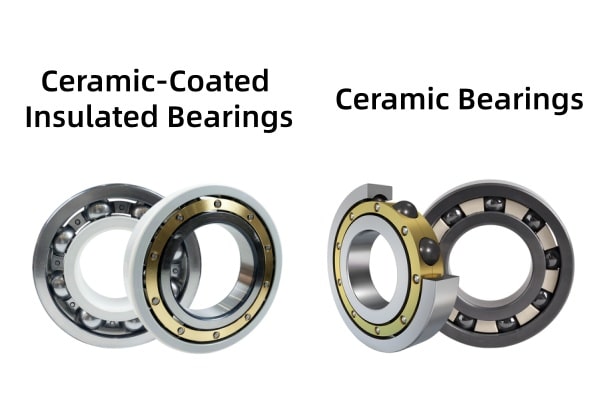
Ceramic-Coated Rings
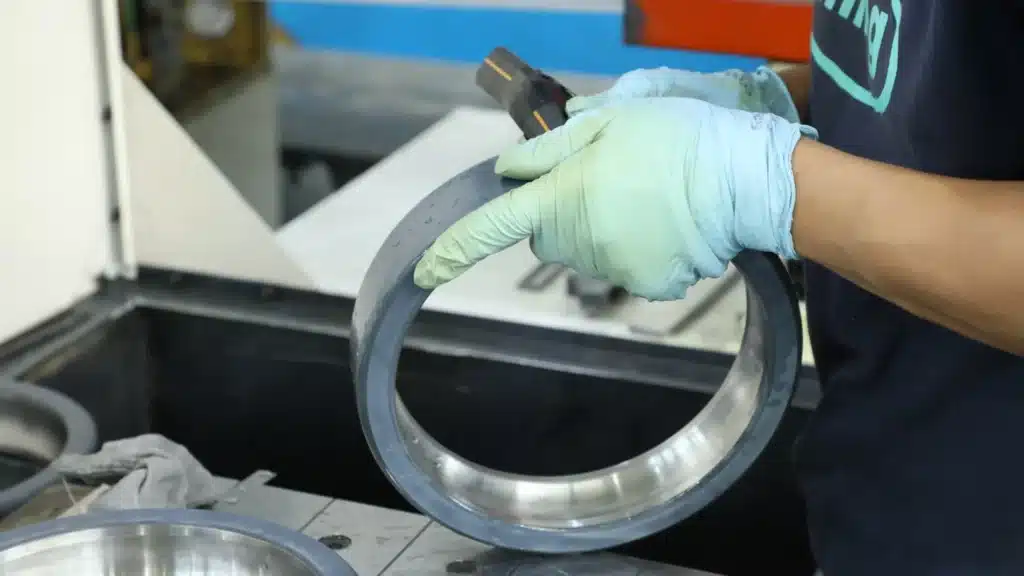
Ceramic coatings (often plasma-sprayed alumina) are widely used because they offer very high bulk resistivity and good corrosion resistance. In harsh environments:
- Dense, low-porosity coatings with proper sealing maintain high insulation resistance even at elevated humidity.
- Poorly sealed or thin coatings are more vulnerable to moisture ingress and chemical attack, leading to faster degradation.
Hybrid Ceramic Bearings
Hybrid bearings use ceramic balls and steel rings:
- The ceramic balls themselves are fully insulating and unaffected by humidity.
- However, leakage can still occur via steel rings, cages, and lubricant paths if water films and contaminants bridge inner and outer rings.
Hybrid bearings, therefore, benefit from the same surface-cleanliness and sealing measures as coated types.
Polymer Barriers and Housings
Non-metallic housings, sleeves, or inserts made from engineering polymers can provide good insulation, but:
- Some plastics absorb water, which increases conductivity and can lead to dimensional change.
- Certain solvents, oils, or chemicals can stress-crack or soften the polymer, undermining mechanical and electrical performance over time.
Choosing low-absorption, chemically resistant polymers is essential where humidity and chemicals are present.
Design Strategies to Maintain Insulation Performance
Choose the Right Coating and Seal System
For motors and generators in humid or corrosive environments:
- Specify low-porosity, plasma-sprayed ceramic coatings with sealing treatments designed for moisture and salt resistance.
- Combine insulated bearings with high-quality shaft and housing seals (labyrinth, V-ring, or contact seals) to limit ingress of water and dust.
- Ensure the coated surfaces used as insulation are not in direct splash zones when possible, or shield them with deflectors.
These steps minimize both the amount of moisture reaching the insulation and the time surfaces remain wet.

Manage Condensation and Ventilation
To limit condensation:
- Integrate space heaters or anti-condensation heaters in large motors that sit idle in humid environments.
- Provide drain holes and breathers in end bells so any collected water can escape and air can circulate.
- Avoid fully sealing enclosures without pressure equalization, which can draw moist air past seals during cooling cycles.
Keeping internal temperatures slightly above ambient dew point is often enough to prevent most condensation-related insulation problems.
Control Contamination Sources
Design and plant layout can reduce how much contamination reaches bearings:
- Position motors away from direct process vents that emit corrosive or oily fumes, or enclose them in filtered housings where relocation is impossible.
- Use filters or purged enclosures with clean air in extremely dirty or corrosive zones.
- Orient cable entries and junction boxes to avoid drips that carry contaminants onto bearing housings.
These measures support the bearing insulation rather than relying on it to survive continuous chemical attack.
Maintenance Practices to Preserve Insulation
Cleaning and Inspection
Routine inspections should include:
- Visual checks for rust wedges, flaking, or discoloration on coated rings.
- Removal of conductive dust, salt deposits, or oil films from exposed ceramic or polymer surfaces with appropriate non-aggressive cleaners.
Any signs of tracking marks or localized burn spots suggest partial discharges and justify deeper investigation.
Insulation-Resistance Trending
For critical motors and generators:
- Periodically measure shaft-to-frame insulation resistance or inner-to-outer ring resistance on spare bearings, logging values along with ambient temperature and humidity.
- Look for downward trends over time rather than relying on a single threshold value; a dropping curve often signals moisture or contamination build-up before visible damage occurs.
Trending provides an early-warning system, allowing planned refurbishment or bearing replacement rather than emergency failures.
Lubrication Management
Water contamination in grease or oil reduces dielectric strength and promotes both corrosion and electrical breakdown:
- Use lubricants with good water-resistance characteristics for humid applications and purge old grease according to OEM recommendations.
- Periodically check lubricants for water content in critical machines, especially where steam or wash down is present.
Keeping the lubricant dry and clean supports both mechanical and electrical life of the bearing.
When to Upgrade to Enhanced Insulated Solutions
In some environments, even well-specified and well-maintained standard insulated bearings may age faster than desired. Consider upgrading when:
- Motors are located outdoors near the coast, in cooling towers, or on offshore platforms where salt-laden mist is constant.
- Plants use frequent high-pressure wash-down or steam cleaning around motors.
- Past experience shows repeated insulation breakdown or electrical bearing damage in the same area.

Enhanced solutions can include:
- Thicker or premium-grade ceramic coatings rated for marine or chemical service, sometimes combined with special sealants.
- Hybrid bearings with coated rings, combining non-conductive balls and insulated fits so multiple parallel current paths are blocked.
- Fully integrated barrier systems, where the motor OEM uses coordinated coatings, polymer components, and improved sealing as part of a “harsh-environment VFD-ready” design.
Although these options increase upfront cost, they often pay back rapidly in reduced failures and maintenance in extreme service.
Common Insulated Bearing Models for Industrial Motors
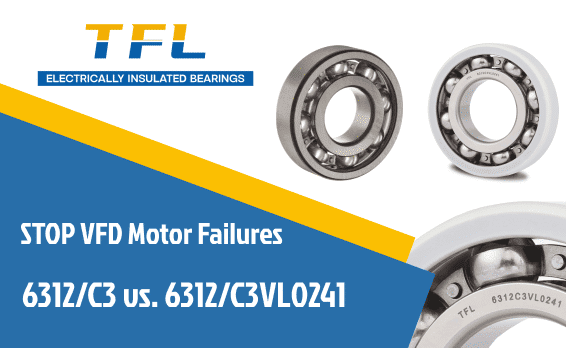
Below is a list of frequently used insulated bearing models 6300 Series suitable for variable frequency motors in demanding environments.
| TFL VL0241 | FAG J20AA | TFL VL2071 | FAG J20C |
| 6309/C3VL0241 | 6309-J20AA-C3 | — | — |
| 6310M/C3VL0241 | 6310-M-J20AA-C3 | — | — |
| 6311M/C3VL0241 | 6311-M-J20AA-C3 | — | — |
| 6312/C3VL0241 | 6312-J20AA-C3 | — | — |
| 6313/C3VL0241 | 6313-J20AA-C3 | — | — |
| 6314/C3VL0241 | 6314-J20AA-C3 | 6314/C3VL2071 | 6314-J20C-C3 |
| 6315M/C3VL0241 | 6315-M-J20AA-C3 | — | — |
| 6316/C3VL0241 | 6316-J20AA-C3 | 6316/C3VL2071 | 6316-J20C-C3 |
| 6317/C3VL0241 | 6317-J20AA-C3 | 6317/C3VL2071 | 6317-J20C-C3 |
| 6318/C3VL0241 | 6318-J20AA-C3 | 6318/C3VL2071 | 6318-2Z-J20C-C3 |
| 6319/C3VL0241 | 6319-J20AA-C3 | — | — |
| 6320/C3VL0241 | 6320-J20AA-C3 | 6320/C3VL2071 | 6320-J20C-C3 |
| 6321M/C3VL0241 | 6321-M-J20AA-C3 | — | — |
| 6322M/C3VL0241 | 6322-M-J20AA-C3 | — | — |
| 6324/C3VL0241 | 6324-J20AA-C3 | 6324/C3VL2071 | 6324-J20C-C3 |
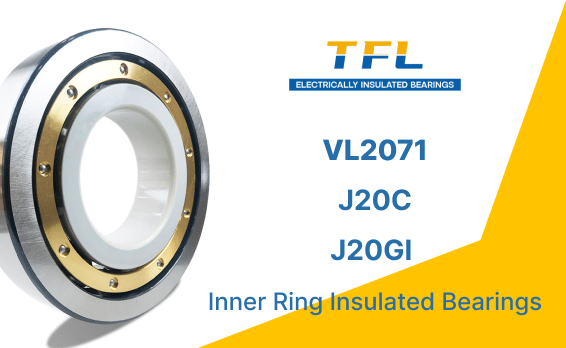
Note: Suffixes like J20AA, J20C, VL0241, and VL2071 typically denote specific coating types and breakdown voltage ratings tailored for different OEMs.
Summary: Designing Insulated Bearings That Survive Humidity and Harsh Environments
High humidity and harsh environments attack bearing insulation through moisture films, condensation cycles, contaminants, and chemical reactions. These mechanisms lower insulation resistance, increase leakage currents, and eventually allow damaging shaft currents to bypass the insulating layer.
By choosing dense, well-sealed ceramic coatings or robust polymer barriers to control condensation and contamination, and implementing sound maintenance and monitoring practices, engineers can keep insulation resistance high throughout the machine’s whole service life, even in coastal, chemical, or wash-down conditions. When conditions are extreme, upgrading to enhanced insulation systems provides an additional safety margin that protects both bearings and the critical processes they support.
Protect Your Equipment with TFL Insulated Bearings
At TFL Insulated Bearings, we understand that standard protection isn’t enough when your motors are facing the open ocean, chemical vapors, or daily wash-downs. We specialize in engineering high-resistance coatings and robust sealing solutions that refuse to fail, even when the environment does its worst.
Don’t wait for moisture to bridge the gap and stop your production.
- Contact us today to discuss your specific environmental challenges.
- Email our engineering team directly at [email protected] for a custom consultation.
- Call us at +86 15806631151 for immediate support.
If you are ready to upgrade your motor reliability, Click the Sidebar Chat to get a quote for our marine and chemical-grade insulated bearings.