
Introduction
Proper lubrication is the cornerstone of motor bearing reliability and longevity. Whether in industrial pumping, HVAC fans, high-speed spindles, or power generation, motor bearings depend on well-selected lubricants, proper application practices, and ongoing monitoring to prevent costly failures and maximize operational efficiency. This guide explores the scientific principles of motor bearing lubrication, explains the different lubrication regimes, breaks down lubricant types, presents actionable best practices, and covers troubleshooting and advanced strategies for superior maintenance and performance.
Why Bearing Lubrication Matters
Proper lubrication is fundamentally the cornerstone of motor bearing performance, reliability, and longevity. Bearings are mechanical elements that rely on a delicate, precisely maintained film of lubricant, commonly grease or oil, to prevent the direct metal-to-metal contact that causes friction, heat, and wear. When lubrication is adequate, it dramatically reduces surface wear and power loss while enhancing operating safety and maintenance intervals.
Key Functions of Bearing Lubrication
- Friction and Wear Reduction:
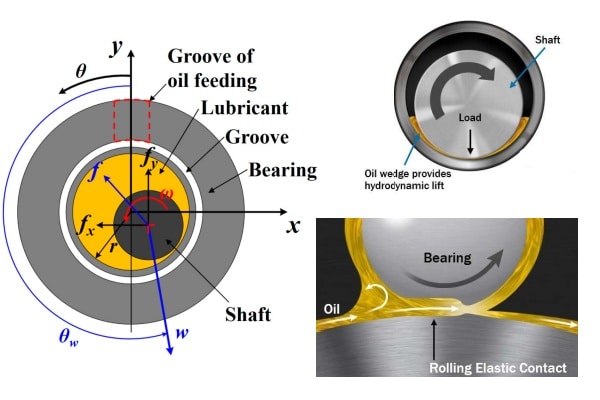
The lubricant film acts as a physical barrier, separating the rolling elements from the raceways. Rolling bearings especially benefit from elastohydrodynamic lubrication (EHD), where, at high speeds and loads, a pressurized lubricant film completely prevents surface contact, minimizing friction to near fluid levels. Without adequate lubrication, friction rises sharply, accelerating surface degradation and ultimately leading to bearing failure.
- Heat Dissipation:
Lubricants absorb and carry away heat generated via friction and environmental factors within the bearing. Maintaining appropriate lubricant viscosity and quantity controls operating temperature, preventing thermal damage to both the bearing material and lubricant properties.
- Contaminant Removal & Protection:
Lubricants help flush microscopic contaminants and debris out of the contact zone, reducing abrasive wear. They also protect bearing surfaces against corrosion and oxidation, especially important in moist, chemically aggressive, or dusty environments.
- Sealing and Moisture Barrier:
The lubricant presence aids in sealing gaps between moving parts, discouraging ingress of moisture, dust, and corrosive substances that can accelerate bearing degradation.
Consequences of Poor Lubrication
- Bearing failure due to metal-to-metal contact, increased friction, and surface scoring.
- Increased operating temperatures accelerating lubricant breakdown and material stress.
- Premature spalling, pitting, and surface fatigue caused by lack of separation.
- Higher maintenance costs from frequent replacements and unplanned downtime.
Advanced Considerations
- Lubrication Regimes: Bearings typically operate under hydrodynamic or elastohydrodynamic lubricationduring full-speed use, but transition through mixed and boundary lubrication during start/stop cycles or insufficient lubrication. Recognizing and maintaining lubrication that supports the preferred regime is critical for maximizing bearing life.
- Synthetic vs Mineral Oils: Synthetic base oils offer superior oxidation stability, thermal resistance, and consistent viscosity under varied temperatures, making them preferable in demanding applications such as high-speed or variable-frequency drives (VFDs).
- Lubricant Quantity and Application: Over-lubrication causes churning, heat buildup, and seal damage, while under-lubrication leads to metal contact and early failure. Industry research recommends filling grease housings 30-50%, applying automated or scheduled lubrication, and ensuring clean, contamination-free re-lubrication.
Science of Lubrication: Lubrication Regimes and Film Formation
Lubrication Regimes Explained
1. Boundary Lubrication
Occurs when surfaces are mostly in contact, and the lubricant film is thin. Most common at start-up, during shutdown, or when insufficient lubricant is present.
- Characteristics: High friction, additive-reliant, higher wear rates.
2. Mixed Film Lubrication
Transition regime. A thin film separates some parts; others touch.
- Characteristics: Moderately reduced friction; lubrication effectiveness depends on film thickness and surface finish.
3. Hydrodynamic and Elastohydrodynamic lubrication (EHD)
Ideal regime for rolling bearings at speed, where an oil film entirely separates surfaces. EHD films form due to high pressure in rolling elements; oil viscosity, velocity, and load are key parameters.
- Characteristics: Lowest friction, long life, metal-to-metal contact eliminated.
Stribeck Curve & Bearing Friction
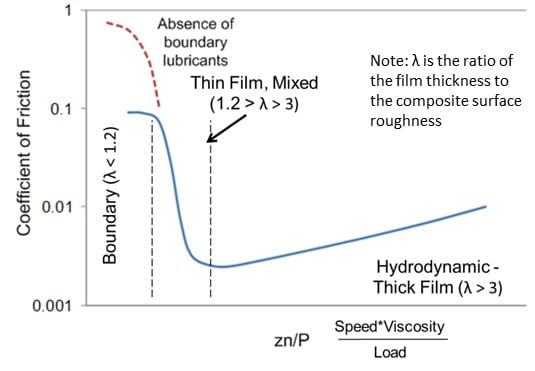
The Stribeck Curve illustrates how the coefficient of friction in a bearing changes with lubrication regime, oil viscosity, speed, and load. Hydrodynamic lubrication (regime I) is the target for bearings in continuous operation; boundary lubrication should be minimized.
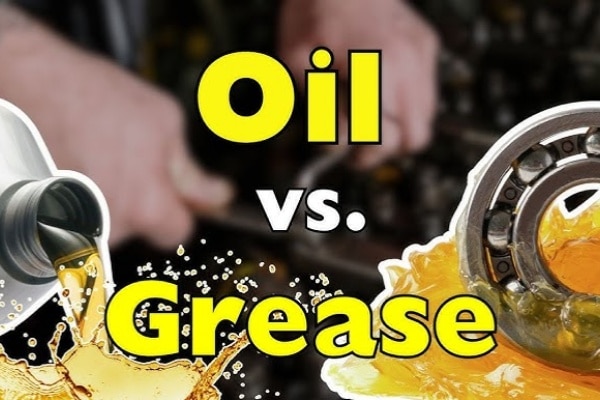
Lubricants: Grease vs. Oil
Grease Lubrication
- Composition: Base oil with thickener (e.g., lithium complex, calcium sulfonate) and additives for water resistance, oxidation stability, and load support.
- Applications: Easier maintenance, preferred for most electric motors, especially where seals are needed.
- Best Practices: Fill only 30-50% of bearing housing to avoid overheating; too much grease causes churning and temperature spikes.
Oil Lubrication
- Composition: Mineral, synthetic, or specialty oils with additive packages for pressure, anti-wear, and corrosion protection.
- Applications: High-temperature, ultra-high-speed, or heavy load scenarios (turbines, spindles, compressors).
- Advantages: Better cooling, fully replenishable, ideal for circulating systems.
- Challenges: Prone to leakage if not well-sealed; more involved maintenance.
Synthetic vs. Mineral Oils
- Synthetics (POE, PAO): Superior high-temperature and oxidative stability, often mandatory in demanding motor installations.
- Mineral Oils: Cost-effective for moderate-speed and temperature applications.
Key Lubricant Properties Affecting Bearing Performance
- Viscosity: Crucial factor; must support load at operating temperature and speed. Higher loads/low speeds require thicker oils, and high speeds need lower viscosity to prevent excess drag.
- Additive Package: EP (extreme pressure), AW (anti-wear), oxidation inhibitors, water-resistant additives.
- Base Oil Type: Impacts film integrity, heat resistance, and re-lubrication intervals.
- Consistency (NLGI Grade for Grease): Balance flow and staying power within bearing.
Lubrication Calculations and Film Theory
- Film Thickness: Depends on oil viscosity, speed, temperature, and rolling element pressure. EHD theory (Hamrock-Dowson formula) estimates minimum required thickness (hmin) for reliable separation.
- Viscosity Ratio (λ): Ratio of oil film thickness to surface roughness. λ > 3 = full-film regime; λ < 1 = boundary.
- Kappa Ratio (κ): Real-world evaluation; ensures chosen lubricant meets application stress levels.
Motor Bearing Lubrication Best-Practice Checklist
1. Lubricant Selection
- Base oil type: Synthetic for high-speed or temperature conditions, mineral for normal conditions.
- Proper NLGI grade for grease consistency and performance.
- Additives to match contaminants, humidity, and load specifics.
- Match viscosity to manufacturer and operational charts.
2. Correct Quantity
- Over-lubrication = churning, heat build-up, wasted grease/oil.
- Under-lubrication = metal contact, seizure, rapid wear.
- Target 30-50% fill for grease; maintain steady flow for oil.
3. Application Method
- Hand greasing for low-speed, small units.
- Automatic systems for critical, high-speed, or inaccessible bearings.
- Circulating oil for extreme duty and cooling needs.
4. Scheduled Re-Lubrication
- Consult OEM intervals (often every 1,000–3,000 running hours for motors).
- Adjust schedule for harsh environments (dusty, wet, hot), or high-duty cycles.
- Purge old grease during re-lubrication (drain/fill method).
Troubleshooting and Common Lubrication Failures
Too Much Grease
- Symptoms: Overheating, churning, seal leakage.
- Fix: Purge excess, use a calibrated grease gun, install relief plugs.

Too Little Grease or Oil
- Symptoms: Increased noise/vibration, premature wear, overheating.
- Fix: Increase frequency/quantity; improve monitoring and documentation.
Wrong Lubricant
- Symptoms: Breakdowns, rapid viscosity loss, hard deposits, or sludge in housing.
- Fix: Review records, flush incorrect lubricant, and apply the right product as specified.
Contamination
- Symptoms: Rust, black grease, abrasive wear, frequent breakdowns.
- Fix: Inspect and upgrade seals, use filtered systems, and clean maintenance areas.
Advanced Topics in Bearing Lubrication Science
1. Lubrication in VFD-Driven Motors
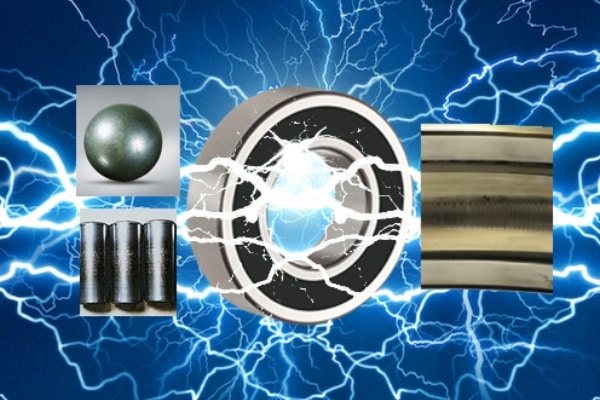
- Stray electrical currents from variable frequency drives require grease and bearing designs that resist electrical erosion (hybrid/ceramic bearings, conductive greases, insulated designs).
2. Environmental Controls
- For outdoor, mining, or chemical plants: Choose lubricants with high water resistance, oxidation stability, and compatible with ambient exposure.
3. Condition Monitoring
- Use vibration, temperature, and acoustic sensors to alert for lubrication breakdown proactively.
- Employ maintenance software to automate reminders and log greasing/oiling.
Testing, Evaluation, and Tribology Fundamentals
- Periodically analyze lubricant for viscosity, particle count, and additive depletion.
- Fluid film engineering: Use elastohydrodynamic theory to ensure oil film integrity at all speeds and loads.
- Wear analysis: Use optical or electron microscopy to inspect surface deposits, wear mechanisms, and correlate with lubrication regime.
Examples and Case Studies
- Manufacturing plant implemented synthetic lubrication and doubled bearing life on high-speed conveyors.
- Wind turbine farm reduced failures by switching from mineral to calcium sulfonate complex grease, which outperformed under high load, moisture-rich conditions.
- Power station installed automated lubrication, which eliminated human error and saved $100,000/year in bearing replacement.
Lubrication Table: Choosing the Right Solution
| Application | Lubricant Type | Key Properties | Maintenance Method |
| HVAC Fan Motor | Lithium grease | Water resistant | Quarterly hand grease |
| Wind Turbine | Synthetic oil | Extreme EP, Low temp | Circulating system |
| Machine Tool Spindle | PAO synthetic | High speed, low wear | Automated lub. |
| Mining Pump Motor | Calcium complex | Contaminant-proof | Frequent hand/manual |
Protect Your Motors Beyond Lubrication
While mastering lubrication regimes and maintaining the correct oil film thickness is critical for preventing mechanical wear, modern industrial motors face another invisible threat: electrical erosion. Even the best lubrication cannot fully insulate against the stray currents common in Variable Frequency Drive (VFD) applications, which break down lubricants and damage raceways.
At TFL Insulated Bearings, we provide the ultimate safeguard. Our advanced insulated bearings are designed to work in harmony with your lubrication strategy, stopping electrical current in its tracks and extending the life of your motor systems significantly.
Don’t let electrical failure undo your maintenance efforts. Take the next step in total bearing protection:
- Contact Us for a custom consultation on matching insulated bearings with your lubrication needs.
- Get a Quote today by emailing us at info@sdtflbearing.com.
- Speak to an Expert directly at +86 15806631151.
Click the sidebar popup to view our catalog or fill out the form to secure your equipment’s reliability now.