

Motor bearing failure is most often caused by lubrication problems, contamination, misalignment, overload, incorrect installation, electrical erosion, vibration, harsh operating environments, fatigue, or inadequate maintenance. Replacing the bearing without identifying the root cause frequently leads to another premature failure.
Before selecting a replacement motor bearing, confirm the complete model, dimensions, load, speed, internal clearance, cage, seals, lubrication, shaft and housing fits, operating environment, and whether electrical-current protection is required. For replacement support, send the bearing details, motor information, quantity, drawings, and failure photos through the TFL Bearing contact form.
In every industrial facility, electric motor bearings are vital for reliable and smooth machine operation. Yet bearing failures are common, disruptive, and expensive, often leading to unexpected downtime, repairs, and lost productivity. Understanding the real reasons motor bearings fail is essential for reliability engineers, maintenance managers, and equipment owners. With the correct diagnosis and corrective action, many recurring failures can be reduced or eliminated. This guide covers 10 common causes of motor bearing failure, their typical symptoms, and practical solutions for improving equipment reliability.
Lubrication Failure
Lubrication problems are among the most frequently identified causes of premature motor bearing failure in industrial equipment. Bearings rely on a controlled film of grease or oil to minimize direct metal-to-metal contact between rolling elements and raceways, reduce friction, dissipate heat, and limit wear. When lubrication fails, even a correctly manufactured and selected bearing can deteriorate rapidly.
Symptoms: Overheating, grinding noise, excessive vibration, wear on balls, rollers, or raceways, and lubricant discoloration.
Causes: Incorrect lubricant, excessive or insufficient quantity, unsuitable relubrication intervals, contamination, incompatible grease mixing, or operating beyond the lubricant’s effective service life.
Solutions:
- Use the lubricant specified by the motor, equipment, or bearing manufacturer.
- Set relubrication intervals according to bearing size, speed, load, temperature, operating hours, and environment.
- Avoid mixing lubricant types unless their compatibility has been confirmed.
- Inspect grease condition and lubrication points regularly.
- Consider automatic lubrication systems for critical machinery where controlled lubricant delivery is required.
- Use suitable sealed or shielded bearings where contamination control is necessary.
Contamination
Contamination is another common cause of premature motor bearing failure, particularly in dusty, wet, abrasive, or chemically aggressive industrial environments. Bearings depend on a clean and stable lubricant film, but even small amounts of dirt, moisture, chemicals, fibers, or metallic particles can disrupt that film and damage rolling surfaces.
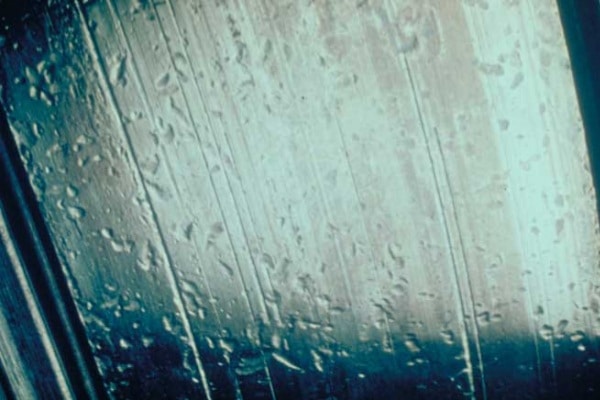
Symptoms: Brown or black grease, pitted or scratched bearing surfaces, increased noise, corrosion, premature wear, and possible seizure.
Causes: Dust, dirt, water, chemicals, metal particles, damaged seals, dirty maintenance tools, or contaminated lubricant.
Solutions:
- Install seals or shields suitable for the operating environment.
- Keep maintenance areas, tools, hands, and replacement components clean.
- Do not expose an open bearing to dirt or moisture during storage and handling.
- Use filtered oil or lubrication systems where appropriate.
- Inspect shaft, housing, and seal contact surfaces for wear or damage.
- For corrosive or wet environments, evaluate suitable bearing materials, coatings, seals, and lubricants according to the application.
Misalignment
Misalignment in electric motor bearing systems is a frequent cause of increased wear, vibration, heat, noise, and efficiency loss. It occurs when the motor shaft, bearing housing, coupling, pulley, or driven equipment is not correctly aligned, creating uneven load distribution and localized stress.

Symptoms: Uneven bearing wear, vibration, excessive noise, increased motor current or power consumption, heat, and shaft or coupling damage.
Causes: Incorrect mounting, bent shafts, soft foot, housing deformation, improper fit, and misaligned couplings or pulleys.
Solutions:
- Use laser alignment tools or dial indicators during installation and periodic verification.
- Check motor feet, mounting surfaces, couplings, belt drives, and connected equipment.
- Confirm shaft and housing fits against the applicable tolerance requirements.
- Inspect and repair bent shafts, damaged housings, worn couplings, or inaccurate mounting surfaces.
- Where unavoidable angular misalignment is part of the application, evaluate an appropriate self-aligning bearing arrangement rather than using it to compensate for correctable installation errors.
Overloading or Shock Loads
Overloading and shock loads are destructive threats to electric motor bearings. Bearings are selected for defined radial loads, axial loads, speeds, duty cycles, and service conditions. Exceeding these limits during normal operation or sudden process events can cause rapid surface damage or structural failure.
Symptoms: Spalling, brinelling or indentation marks, rapid surface fatigue, overheating, bearing deformation, and repeated replacements.
Causes: Operation outside design loads, process jams, sudden impacts, excessive belt tension, pulley problems, incorrect bearing selection, or unexpected axial load.
Solutions:
- Calculate actual radial, axial, transient, and shock loads rather than relying only on nominal operating conditions.
- Inspect belt tension, pulleys, couplings, driven equipment, and process conditions.
- Correct process bottlenecks, jams, or impact events where possible.
- Select a bearing type and size with suitable load capacity, speed capability, cage, and internal design.
- Evaluate cylindrical roller, spherical roller, or other bearing types only when their load and alignment characteristics match the application.
Improper Installation and Mounting
Improper installation and mounting are among the most overlooked causes of early motor bearing failure. A correctly selected bearing can still fail prematurely if it is contaminated, damaged, mounted with incorrect tools, installed with the wrong fit, or subjected to force through the rolling elements.
Symptoms: Early failure, inner- or outer-ring creep, excessive heat, discoloration, dents, raceway damage, abnormal internal clearance, and noisy operation.
Causes: Hammering, incorrect mounting tools, force applied through the wrong ring, excessive or insufficient fit, inaccurate shaft or housing dimensions, and incorrect preload or endplay.
Solutions:
- Use suitable mounting sleeves, induction heaters, hydraulic tools, presses, and alignment equipment.
- Apply installation force only to the bearing ring being fitted.
- Follow the applicable shaft and housing fit tolerances.
- Do not strike the bearing directly with a hammer.
- Measure shaft runout, housing roundness, shoulders, fillets, and mounting surfaces before installation.
- Confirm the required internal clearance after considering fit and operating temperature.
Electrical Erosion and Shaft Currents
Electrical erosion, electrical discharge, bearing current, and shaft-current damage are increasingly important causes of premature motor bearing failure in some motors driven by variable frequency drives or inverter systems.
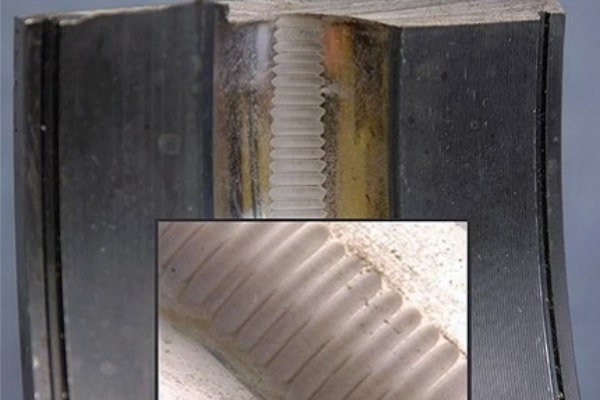
Symptoms: Electrical pitting, frosted raceways, fluting or ripple marks, blackened grease, vibration, high-frequency noise, and premature raceway damage.
Causes: Electrical voltage or current passing through the bearing because of inverter switching, grounding and bonding conditions, cable configuration, circulating currents, rotor-ground currents, or other high-frequency current paths.
Solutions:
- Confirm electrical damage through raceway inspection, vibration analysis, and appropriate shaft-voltage or bearing-current measurements.
- Where specified or technically justified, evaluate ceramic-coated insulated motor bearings or hybrid ceramic bearings.
- Use shaft-grounding rings or grounding brushes when suitable for the identified current path.
- Review motor-frame grounding, high-frequency bonding, motor cables, drive settings, filters, and connected equipment.
- Do not assume that one insulated bearing solves every type of VFD-related bearing current.
Vibration, Including Handling and Standstill Damage
Vibration is both a warning sign and a possible cause of motor bearing damage. Bearings are designed for controlled rolling motion, but excessive vibration during operation, transportation, storage, or prolonged standstill can damage the raceways and shorten service life.
Symptoms: False brinelling, fretting marks, noise, uneven wear, vibration peaks, and degraded operating performance.
Causes: Rotor imbalance, looseness, misalignment, resonance, external machine vibration, transportation vibration, or prolonged standstill while exposed to vibration.
Solutions:
- Secure the rotor according to the motor manufacturer’s shipping and storage instructions.
- Protect stored or idle equipment from external vibration.
- Where recommended for the equipment, rotate the shaft periodically during extended storage.
- Use vibration monitoring and investigate abnormal patterns promptly.
- Correct imbalance, looseness, resonance, soft foot, alignment, or structural problems instead of relying only on a heavier bearing.
Environmental Factors: Temperature, Moisture, and Chemical Attack
Environmental conditions can have a major effect on motor bearing health. Unlike obvious mechanical damage, environmental effects may develop gradually through continued exposure to heat, cold, moisture, chemicals, abrasive dust, or process contamination.
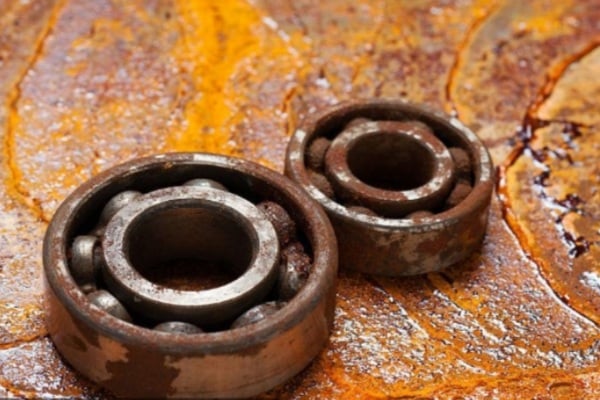
Symptoms: Rust, oxidation, lubricant thickening or thinning, seal damage, cracking, corrosion pits, noise, and rapid wear.
Causes: Excessive heat or cold, moisture ingress, condensation, washdown, corrosive chemicals, abrasive dust, or process byproducts.
Solutions:
- Select bearing materials, coatings, seals, and lubricants suitable for the actual temperature and chemical environment.
- For wet or corrosive environments, evaluate suitable stainless-steel, coated, ceramic, or specialty bearing solutions based on load and speed requirements.
- Improve motor enclosures, protective housings, seals, drainage, ventilation, heaters, or cooling systems where required.
- Adjust lubrication intervals and lubricant selection for high- or low-temperature operation.
- Inspect for condensation during shutdown and temperature cycling.
Fatigue and Material Defects
Rolling-contact fatigue is a normal bearing-life mechanism, but premature fatigue can occur when the bearing is overloaded, incorrectly fitted, poorly lubricated, contaminated, misaligned, or operated under conditions different from those used for selection. Material or manufacturing defects are possible, but they should not be assumed until operating and installation causes have been investigated.
Symptoms: Cracking, spalling, pitting, progressive surface damage, vibration, and loss of operating performance.
Causes: Repeated load cycles, excessive contact stress, unsuitable bearing quality, incorrect heat treatment, subsurface defects, or operation beyond the calculated bearing life.
Solutions:
- Select bearings from a suitable and traceable supply source.
- Calculate bearing life using realistic radial load, axial load, speed, reliability, lubrication, contamination, and duty-cycle assumptions.
- Confirm steel quality, heat treatment, precision, internal clearance, cage, and other relevant specifications for critical applications.
- Use condition monitoring and maintenance records to identify deterioration before severe secondary damage occurs.
- Submit suspected material failures for professional failure analysis rather than diagnosing them only from surface appearance.
Inadequate Maintenance and Poor Record Keeping
One of the most preventable causes of recurring motor bearing failure is inadequate maintenance. Effective maintenance involves more than occasionally adding grease. It requires a consistent process for inspection, lubrication, measurement, documentation, diagnosis, and corrective action.
Symptoms: Unexpected breakdowns, skipped lubrication, missed warning signs, incomplete failure history, and repeated failures after replacement.
Causes: Run-to-failure practices, unclear responsibilities, inconsistent inspection intervals, missing records, or failure to correct the original root cause.
Solutions:
- Implement a preventive or condition-based maintenance program that includes inspection, lubrication, vibration, temperature, and noise monitoring where appropriate.
- Record bearing models, installation dates, lubricant type, lubricant quantity, maintenance actions, measurements, and failure observations.
- Train personnel to identify early symptoms and use correct mounting and lubrication procedures.
- Link repeated bearing failures to motor load, production changes, VFD modifications, environmental changes, and maintenance history.
- Verify the result after each corrective action instead of assuming that bearing replacement solved the problem.
How to Diagnose Recurring Motor Bearing Failure
When the same motor bearing fails repeatedly, replacing it with the same model is not a complete root-cause analysis. Before removing the failed bearing, record the motor’s operating condition so that important evidence is not lost.
- Record the operating symptoms: Note noise, vibration, temperature, current, speed, load, leakage, and the time from installation to failure.
- Confirm the failure location: Determine whether the drive-end bearing, non-drive-end bearing, both motor bearings, or driven-equipment bearings are affected.
- Review the complete designation: Check bearing type, dimensions, clearance, cage, seals, precision, lubrication, and any insulation suffix.
- Inspect the lubricant: Look for contamination, mixing, hardening, oil separation, water, metallic particles, or burnt grease.
- Examine the damage pattern: Identify spalling, smearing, corrosion, false brinelling, fluting, creep, indentation, cage wear, or discoloration.
- Measure connected components: Check shaft and housing fits, runout, roundness, alignment, belt tension, coupling condition, and axial location.
- Review operating changes: Consider load increases, VFD installation, speed changes, new lubrication practices, process changes, or altered environmental conditions.
- Confirm the corrective action: Monitor temperature, vibration, and noise after installation to verify that the root cause has been addressed.
How to Choose a Replacement Motor Bearing
A replacement bearing must match more than the bore, outside diameter, and width. The failure mode may show that the original bearing specification, fit, lubrication, sealing, or electrical protection needs to be reviewed.
- Complete bearing number: Include every suffix shown on the original bearing or motor drawing.
- Dimensions: Confirm bore, outside diameter, width, shoulders, fillets, shaft fit, and housing fit.
- Load and speed: Provide operating and maximum speed, radial load, axial load, shock load, and duty cycle.
- Internal clearance: Confirm whether normal, C3, C4, or another clearance is required after considering fit and temperature.
- Cage, seals, and lubricant: Match these to speed, temperature, contamination, and maintenance requirements.
- Motor position: Identify whether the bearing is installed at the drive end or non-drive end.
- Electrical protection: Where electrical erosion has been confirmed or specified, identify whether an insulated or hybrid bearing is required.
- Failure evidence: Provide nameplate images, bearing photos, raceway photos, drawings, sound recordings, vibration data, and temperature history where available.
Need Help Reviewing a Failed Motor Bearing?
Send the complete bearing model, motor details, quantity, speed, load, installation position, and available failure photos. TFL Bearing can help review the replacement requirements.
Bonus Solutions: Comprehensive Best Practices
- Predictive maintenance: Use vibration, temperature, noise, current, or lubricant monitoring where equipment criticality justifies it.
- Condition-based replacement: Replace bearings based on verified deterioration and risk rather than waiting for severe secondary damage.
- Documentation: Track every installation, lubrication action, measurement, fault, and replacement.
- Clean work environment: Perform bearing handling and installation in a clean and controlled area.
- Technical review: Work with the motor, equipment, bearing, or repair supplier when application-specific design confirmation is required.
Illustrative Root-Cause Scenarios
Scenario 1: A manufacturing motor experiences repeated bearing vibration and overheating. Inspection identifies inconsistent grease quantities, contaminated lubrication tools, and coupling misalignment. A complete corrective action would include cleaning the lubrication process, applying the correct grease quantity, realigning the motor, checking the shaft and housing, and monitoring vibration and temperature after restart.
Scenario 2: Bearings begin failing after a motor is converted to VFD operation. Inspection finds frosted raceways and fluting. The next step is to confirm the electrical-current path and review the motor cable, grounding, bonding, shaft grounding, connected equipment, and insulated-bearing requirements rather than replacing the damaged bearing with another standard version.
These examples illustrate the diagnostic process and are not guaranteed outcomes for every industrial machine. Similar symptoms can have different root causes, so physical inspection and operating data are required.
Common Failure Modes, Symptoms, and Solutions
| Cause | Typical Symptoms | Diagnostic Checks | Practical Solution |
|---|---|---|---|
| Lubrication failure | Overheating, discoloration, grinding, and wear | Lubricant condition, quantity, type, interval, and temperature | Correct lubricant selection, quantity, cleanliness, and schedule |
| Contamination | Brown grease, scratches, corrosion, noise, or seizure | Seals, lubricant sample, environment, and raceway inspection | Improve sealing, handling, filtration, and cleanliness |
| Misalignment | Vibration, heat, noise, and uneven wear | Shaft alignment, coupling, soft foot, runout, and mounting | Realign and repair the shaft, housing, coupling, or mounting surface |
| Overload or shock | Spalling, brinelling, cracking, and deformation | Load, belt tension, process conditions, and bearing capacity | Reduce the load or select a suitable bearing and arrangement |
| Improper installation | Early failure, creep, heat, dents, or clearance problems | Shaft/housing fit, mounting tools, force path, and records | Correct fits and use suitable installation procedures |
| Electrical erosion | Fluting, frosting, black grease, vibration, and noise | Raceway inspection, vibration analysis, and electrical measurements | Apply the appropriate insulated-bearing, grounding, cabling, or filtering solution |
| Vibration | False brinelling, fretting, noise, and standstill marks | Operating vibration, transport, storage, looseness, and resonance | Correct the vibration source and protect equipment during storage |
| Environmental exposure | Rust, oxidation, seal damage, and lubricant problems | Temperature, moisture, chemicals, dust, and enclosure condition | Select suitable materials, seals, lubricant, and environmental protection |
| Fatigue or material issue | Cracking, pitting, spalling, and progressive failure | Load history, bearing life, quality records, and failure analysis | Correct the application conditions and use a suitable bearing specification |
| Maintenance failure | Repeat failures, missed warnings, and incomplete history | Maintenance schedules, records, training, and follow-up measurements | Implement consistent inspection, documentation, training, and verification |
Frequently Asked Questions
What are the main causes of motor bearing failure?
The main causes include lubrication failure, contamination, misalignment, overload, incorrect installation, electrical erosion, excessive vibration, unsuitable environmental conditions, rolling-contact fatigue, and inadequate maintenance. Several causes may act together in the same failed bearing.
What causes motor bearing failures in industrial machines?
Industrial motor bearings may fail because of heavy or changing loads, dust, water, heat, chemical exposure, belt tension, coupling misalignment, unsuitable lubrication, improper installation, VFD-related bearing currents, or insufficient condition monitoring. The actual cause should be confirmed from the damage pattern and operating history.
Why does a replacement motor bearing fail again?
A replacement may fail again when the original root cause remains unchanged. Common examples include incorrect shaft or housing fits, misalignment, excessive grease, contamination, overload, electrical current, incorrect internal clearance, or installation damage.
Can too much grease cause motor bearing failure?
Yes. Excess grease can increase churning, friction, temperature, seal pressure, and lubricant leakage. The correct quantity depends on bearing size, speed, housing design, relubrication method, and operating conditions.
How can I identify electrical motor bearing failure?
Possible signs include microscopic electrical pits, frosted raceways, fluting, darkened grease, high-frequency vibration, and repeated failure after VFD installation. These signs should be confirmed through bearing inspection and suitable electrical and vibration measurements.
Can an insulated bearing prevent motor bearing failure?
An insulated bearing can help prevent failure caused by a current path through the bearing, but it does not correct lubrication, contamination, misalignment, overload, poor fit, or mechanical installation problems. The insulation position and complete electrical-protection strategy must match the motor system.
How do I choose a replacement motor bearing?
Compare the complete bearing designation, dimensions, load, speed, internal clearance, cage, seals, precision, lubricant, shaft and housing fits, operating temperature, environment, and drive-end or non-drive-end position. If electrical erosion is present, also confirm the required insulated-bearing arrangement.
What information is needed for a motor bearing quotation?
Send the complete bearing model, dimensions, quantity, motor manufacturer and model, application, operating speed, radial and axial loads, internal clearance, cage, seals, lubricant, installation position, VFD information, and any available drawings, nameplate images, or failure photos.
Recurring motor bearing failures are often preventable when the damage pattern and operating conditions are investigated carefully. By reviewing lubrication, contamination, alignment, load, mounting, electrical erosion, vibration, environmental exposure, fatigue, and maintenance practices, you can correct the complete bearing system instead of repeatedly replacing the damaged component.
Review Your Motor Bearing Application with TFL
Electrical erosion is only one possible motor bearing failure mechanism, but it is especially important in some VFD-driven motors and generators. TFL supplies insulated motor bearing options for applications where electrical-current protection is required.
For a replacement review, provide the complete bearing designation, motor information, quantity, operating speed and load, drive-end or non-drive-end position, and available drawings or failed-bearing photos.
Contact TFL Bearing:
Email: [email protected]
Telephone: +86 15806631151
Online enquiry: Submit your bearing requirements