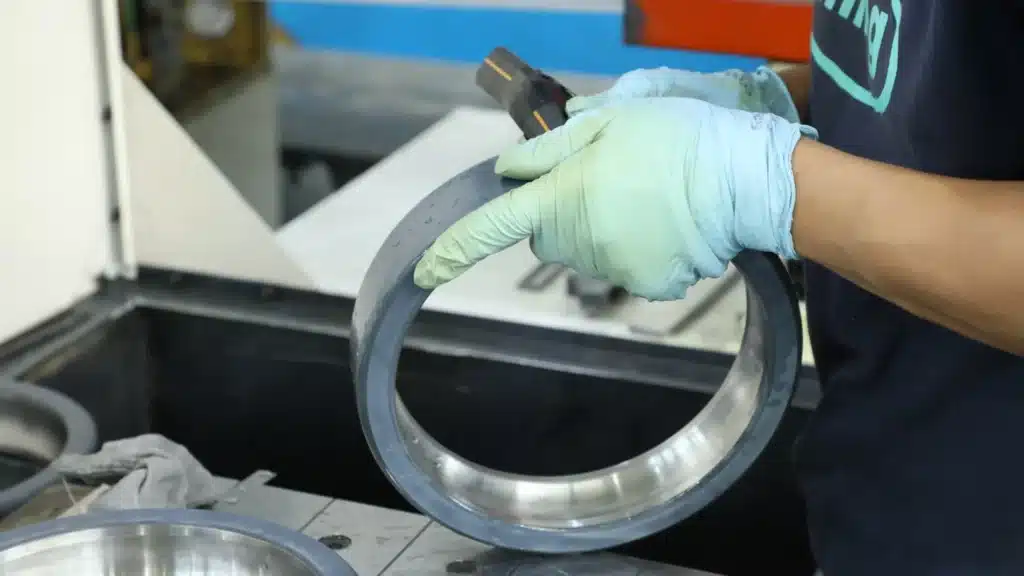


Electrically Insulated Bearings for EV Motors: How They Reduce Failures
High-voltage EV systems create damaging shaft currents that destroy standard bearings. This guide explains how electrically insulated bearings prevent failure, reduce noise, and lower lifecycle costs for OEMs and fleets.

How to Choose the Right Motor Bearings for High-Load & High-Speed Applications
This comprehensive guide details the critical criteria for selecting reliable motor bearings in demanding environments, covering load analysis, speed ratings, advanced materials like ceramics, and best practices for lubrication and maintenance.

How Temperature, Load & Speed Affect Motor Bearing Performance
A comprehensive guide exploring the “trinity” of bearing engineering—temperature, load, and speed—and actionable strategies to maximize motor reliability and uptime in demanding applications.

10 Reasons Your Motor Bearings Keep Failing (With Practical Solutions)
This guide details the ten most frequent reasons for electric motor bearing failure, including lubrication errors, misalignment, and electrical erosion, providing practical solutions and maintenance strategies to ensure reliability and maximize equipment service life.

Comparison of Ceramic-Coated, Hybrid Ceramic, and Full Ceramic Bearings
Protect your motors from shaft current damage. This guide explains the advantages of TFL’s ceramic-coated and ceramic bearings to help you find the most cost-effective insulation solution.

How Electrical Currents Damage Bearings-And How Insulated Bearings Solve It
Modern motors utilizing VFDs are prone to electrical erosion that destroys standard bearings. This guide explains the causes of shaft voltage and details how insulated bearings effectively block harmful currents to ensure reliable operation.

Bearing Failure Analysis: Electrical Pitting, Fluting & Shaft Voltage Issues
Electrical currents and shaft voltages are major contributors to premature bearing failure, causing distinct pitting and fluting patterns. This guide analyzes these failure modes and outlines essential prevention strategies, including grounding techniques and the use of insulated bearings, to protect your industrial equipment.

Ceramic vs Hybrid vs Insulated Bearings: Which One Should You Choose?
Confused by the different bearing types? This comprehensive guide compares Ceramic, Hybrid, and Insulated bearings, breaking down their durability, electrical properties, and cost-efficiency to help you make the right decision for your industrial needs.

Insulated Bearings: The Hidden Technology Protecting Modern Motors
This guide explores the critical technology behind insulated bearings and their role in preventing electrical erosion caused by stray shaft voltages in VFD-controlled motors. By examining ceramic coating methods, hybrid designs, and proper selection strategies, the article demonstrates how these components safeguard industrial systems and significantly reduce maintenance downtime.

Five Reasons for Using Electrically Insulated Bearings in Motors
TFL Electrically Insulated Bearings use high-performance ceramic coatings to effectively prevent shaft current damage, extend motor life, and reduce maintenance costs. They are widely applied in EVs, wind power, rail traction, and industrial automation systems.

Solutions to Motor Bearing Electrical Damage — The Case of 6322 C3VL0241
TFL addresses critical motor bearing failures caused by stray electrical currents with its specialized 6322 C3VL0241 Electrically Insulated Bearing. This solution effectively prevents electrical erosion, extends service life, and ensures reliable operation in demanding applications like VFD systems, as proven by a major Middle Eastern water treatment plant.
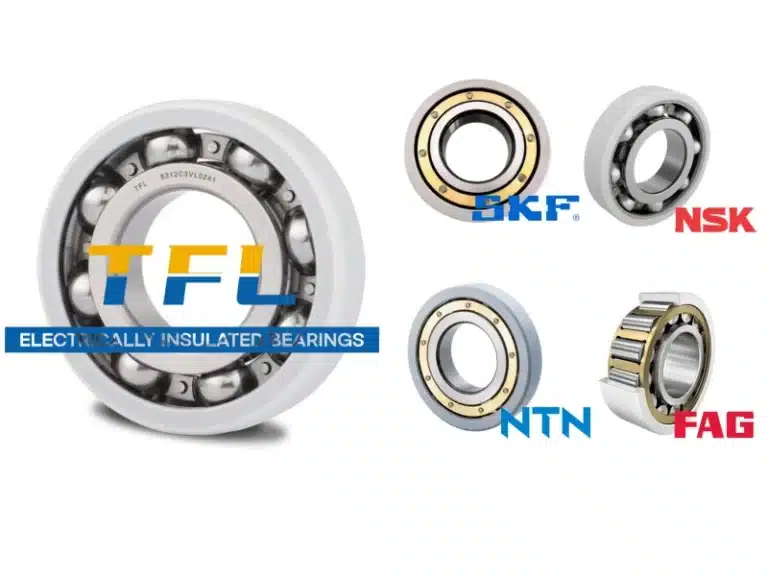
Seamless Swaps: TFL Cross-Reference for SKF, FAG, NTN, NSK Insulated Bearings
Looking to replace your SKF, FAG, NTN, or NSK insulated bearings? Discover our TFL cross-reference guide for a seamless and reliable interchange, ensuring perfect compatibility for your applications.

What Are Electrically Insulated Bearings? Working Principle and Applications
The electrical insulation bearing achieves the physical isolation of the bearing from the current by applying a coating. They are commonly applied in wind power generation, rail transportation and other high-pressure environments. TFL offers several types of electrical insulation bearings.
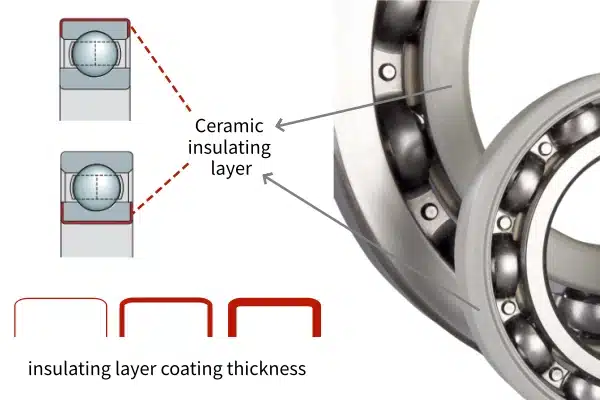
Does A Thicker Coating Mean Better Insulation? A Selecting Guide
This article provides a detailed guide on selecting the optimal coating thickness for insulated bearings. It debunks the misconception that “thicker is always better” or “thinner is unsafe,” explaining that an ideal thickness balances insulation performance, mechanical properties, and heat dissipation.
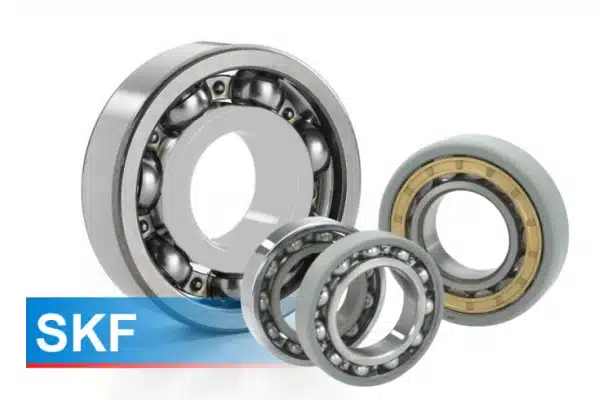
SKF INSOCOAT Bearings Explained: Features, Advantages, and Selection Guide
This article introduces TFL Insulated Bearings as a superior, cost-effective alternative to SKF INSOCOAT bearings, specifically designed to eliminate shaft current erosion in VFD-driven motors and harsh environments with high insulation performance and comprehensive customization options.
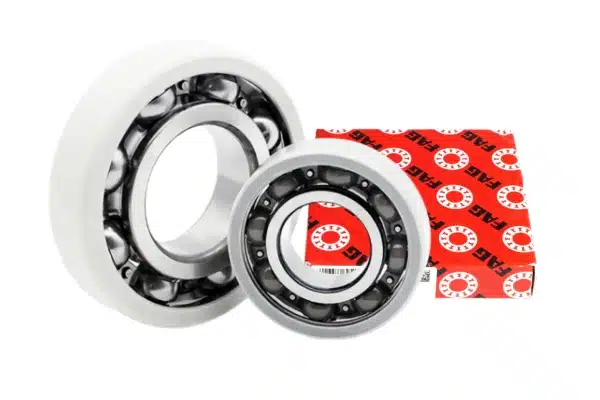
What Does the J20AA Suffix Mean? Decoding FAG Insulated Bearing Nomenclature
This article decodes FAG insulated bearing nomenclature, explaining suffixes like J20AA, J20B, J20A, J20C, and HC, their insulation properties, and applicable environments. It then introduces TFL Insulated Bearings as a superior, cost-effective alternative offering 3000V DC insulation, strict quality control, and flexible customization services.